
WORK OF THE WEEK: F.E. McWilliam, Legs Standing, 1978
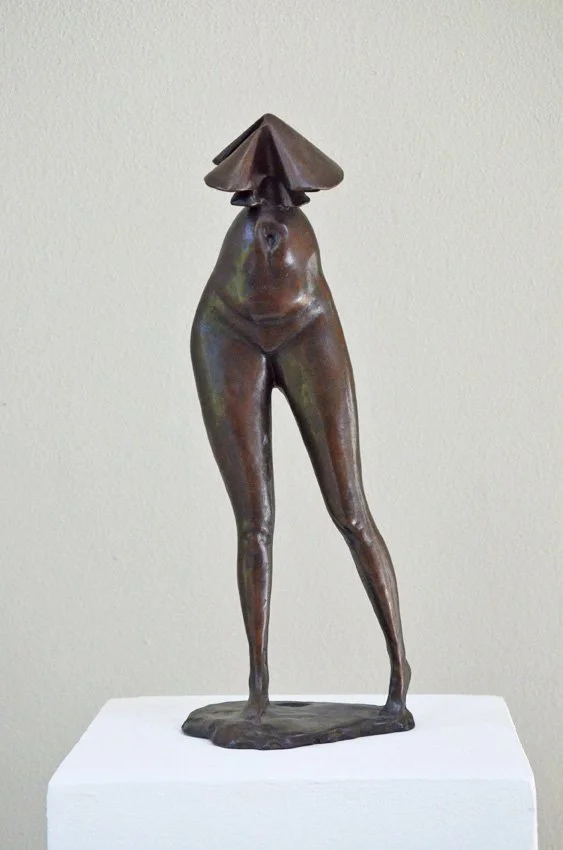
F.E McWilliam
Legs Standing
1978
Signed and editioned 'McW 4/5' (on base)
Bronze
29 x 11 x 9 cm
11 ½ x 4 ⅜ x 3 ½ in.
Ed. 4 of 5
McWilliam turned to the theme of legs after a period of more or less representational sculpture in the early 'seventies when he had worked on the 'Women of Belfast' and 'Banners' series, both of which had elements of direct political reference. The 'Legs' sculptures mark a return to a more playful and paradoxical imagery, and take both the idea of the complete fragment, and of the eliminated torso, as the basis for a series of unexpected and idiosyncratic improvisations. McWilliam's ability to suggest character and movement with the most economic means is fully demonstrated in this series, as is his persistent exploitation of the visual joke and the visual pun. The smaller of these works, as found in Legs Standing have an elegance and a charm, the qualities of inspired jeux d'esprit; a mysterious sculptural presence akin to an idol, enigmatic and frontal.
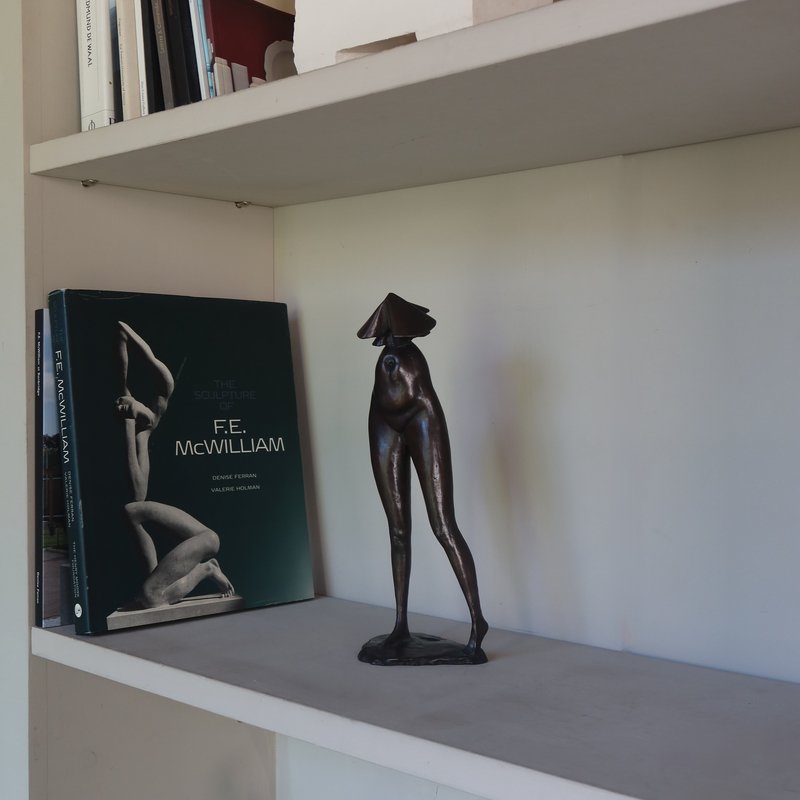
McWilliam turned to sculpture while studying at the Slade under A.H. Gerrard and it was during this time he met friend and fellow sculptor Henry Moore. He was loosely associated with the British Surrealist movement which included artists such as Eileen Agar and Paul Nash. His Surrealist influences are felt in sculptures such as Legs Standing where he approaches the body from a fragmented, absurdist lens.
McWilliam’s work is held in major public collections across the world including the Museum of Modern Art, New York; Art Institute Chicago; Government Art Collection, London; Tate, London; Victoria and Albert Museum, London: British Museum, London and Irish Museum of Modern Art.
The F.E. McWilliam Gallery in Banbridge, McWilliam’s place of birth, is dedicated to his memory and shows a permanent collection of his work. He is remembered as one of Ireland’s most influential and successful artists.
McWilliam's work, in all its moods and diversities of form and mediums, has from the beginning been characterised by witty and fantastic invention.
- Mel Gooding 1989
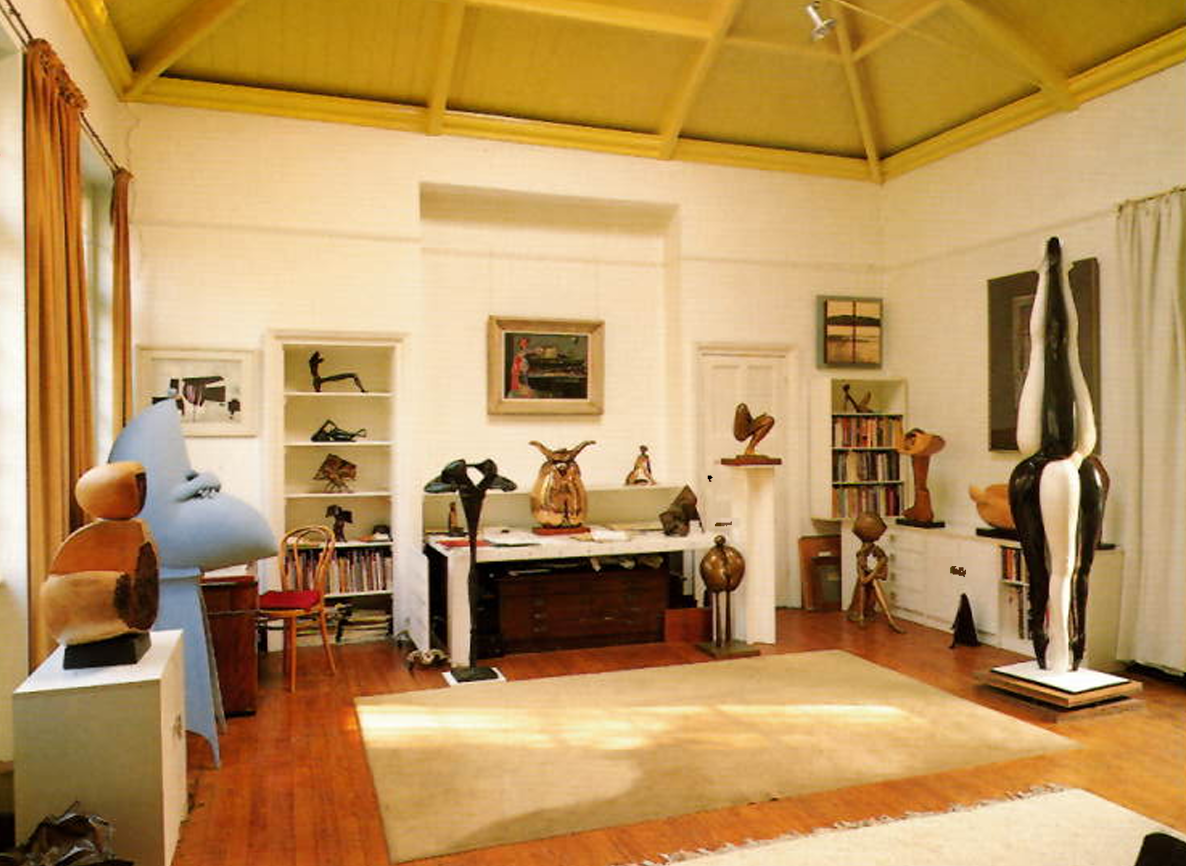
McWilliam's Sitting room, 1988