
Isaac Witkin, Phillip King and Robert Adams
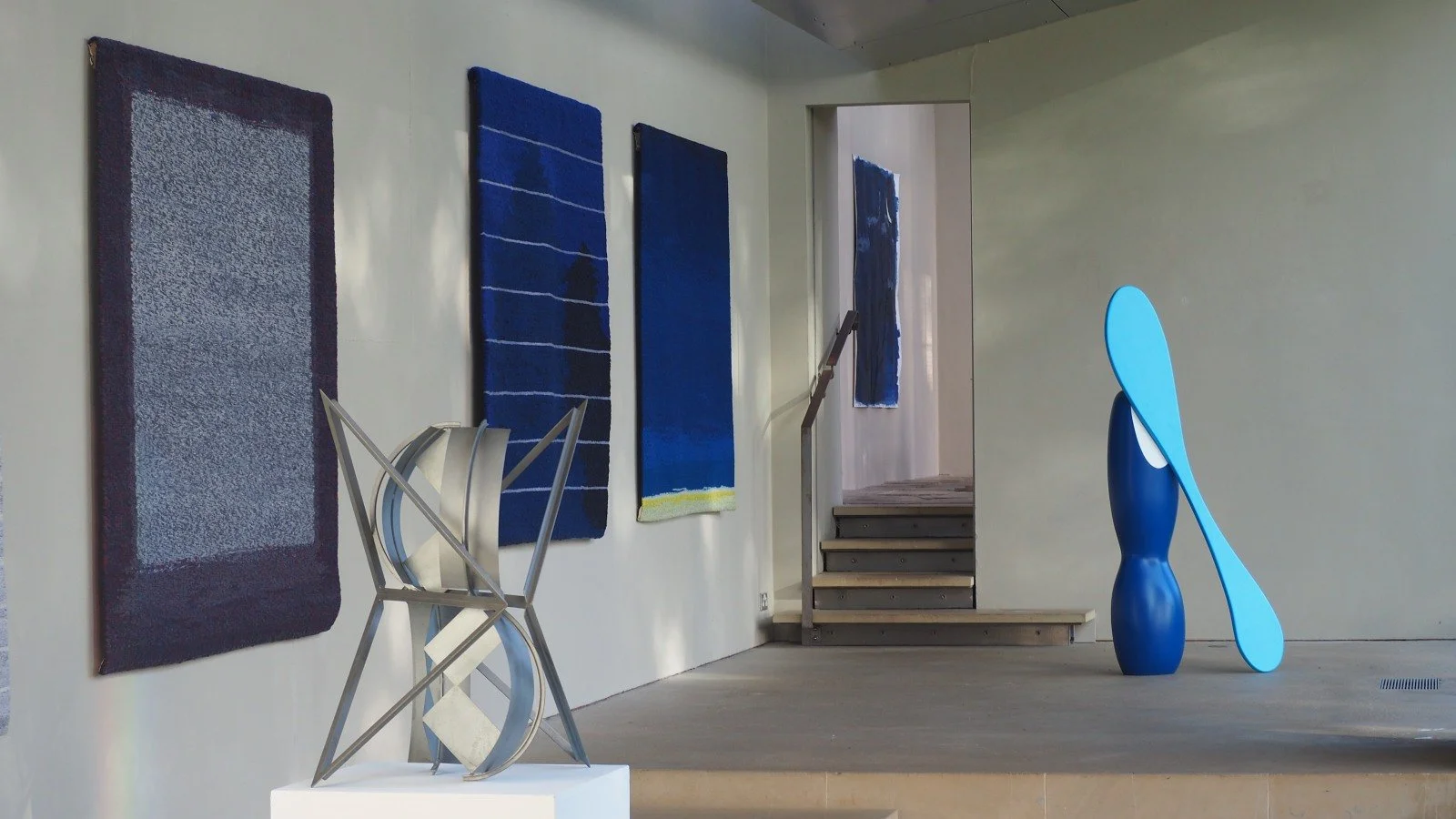
Justine Randall, Philip King and Isaac Witkin’s works in the Gallery at the NewArtCentre, Roche Court Sculpture Park.
We are delighted to announce that our upcoming exhibition of tapestries by Justine Randall will be accompanied by three pieces of British sculpture, Alter Ego (1963) by Isaac Witkin, Diamond Maquette (1972) by Phillip King and Vertical Form No. 1 (1963) by Robert Adams. The exhibition will be on display from 29th November until 1st February. Each sculpture is in conversation with the tapestries, not just through form and colour, but by providing the context of British sculpture in the decades leading up to Randall’s studies at the Royal College of Art.
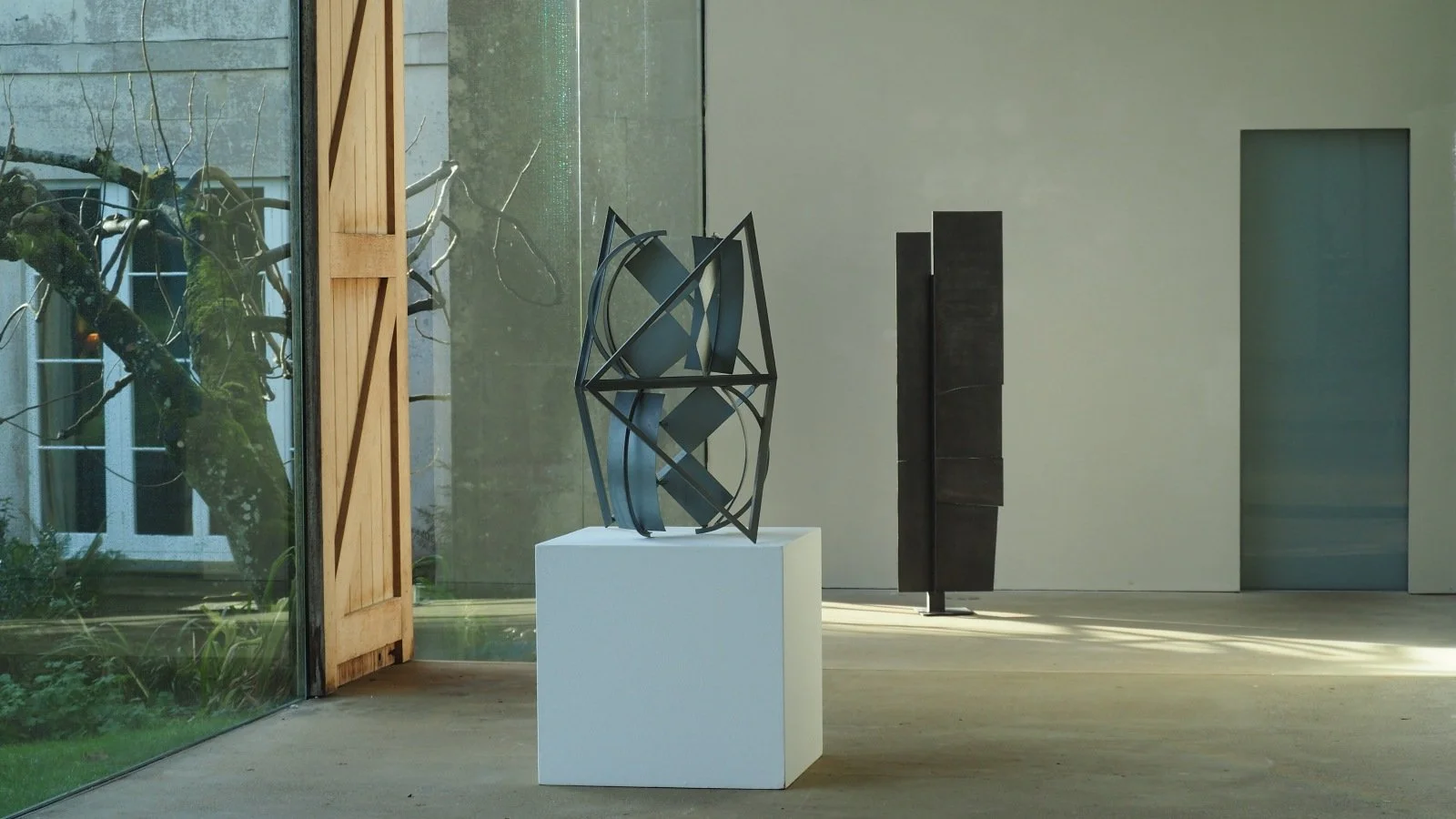
Left: Phillip King, Diamond Maquette, 1972
Right: Robert Adams, Vertical Form No. 1, 1963
Bringing the pieces together gives us a chance to see the international reach of British sculptors in the 1960s and 70s, particularly those like Witkin, King and Adams, that were closely linked to Saint Martins and the Central School of Art and Design. All three artists had strong links to the United States, particularly in New York, where 1960s British abstract sculpture was being shown by gallerists such as Richard Feigen and Robert Elkon.
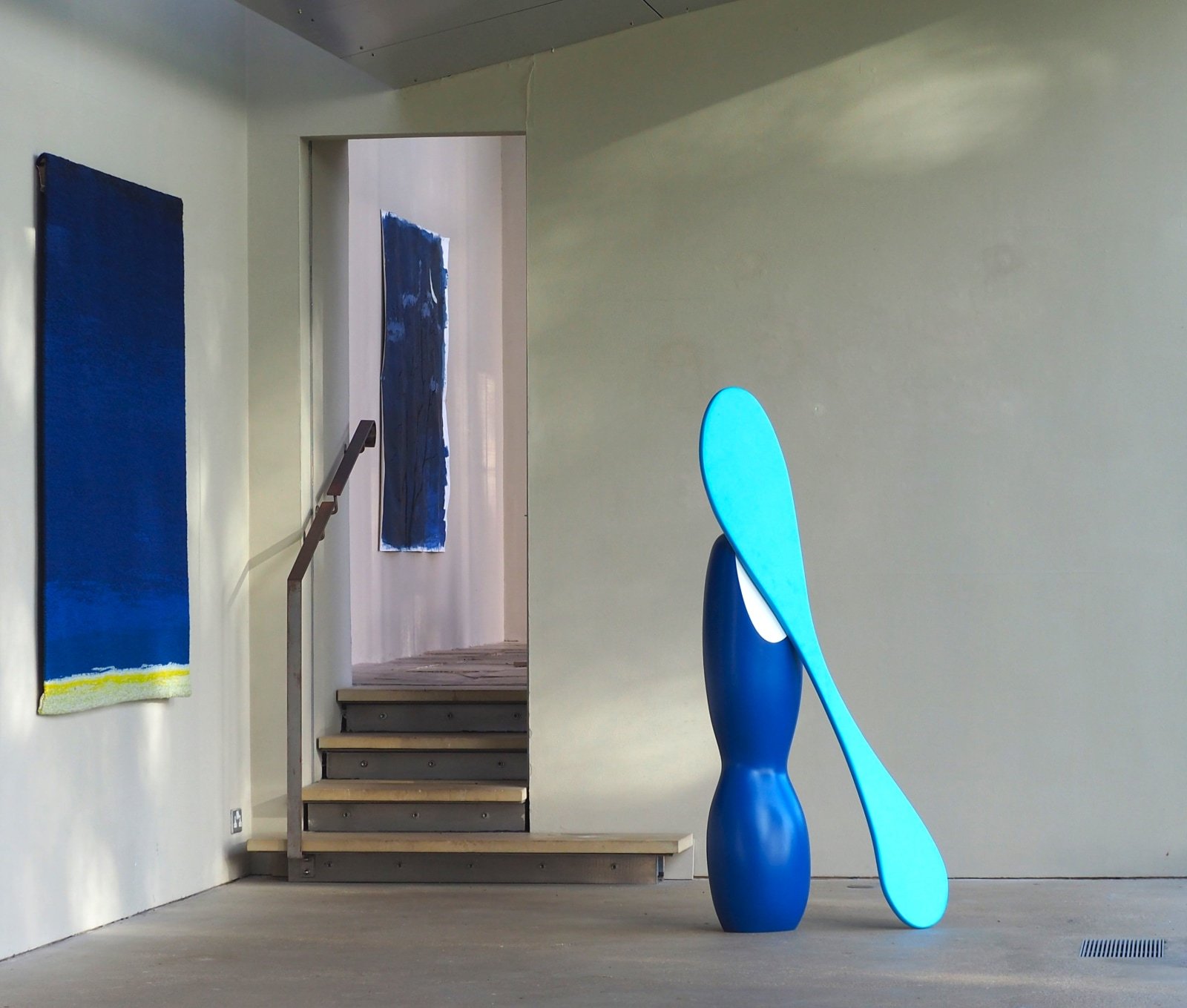
Left: Justine Randall, 5, The Night Sky: Dusk, 2018
Right: Isaac Witkin, Alter Ego, 1963
Alter Ego is one of Witkin’s earliest pieces to use fibreglass, and showcases the artist’s typical bright colours and biomorphic forms. Another piece from the edition was acquired by the Tate in 1970. Alter Ego is in stark contrast to sharp edges of Philip King’s Diamond Maquette, yet both works carry the influence of their teacher, Anthony Caro. The movement towards abstract sculpture that took place in Britain in the late1960s can be seen in these works, and this fascination with abstract form and colour has remained in British art since. As such, the painterly abstraction of Justine Randall’s series of tapestries continues the conversation that was begun in British art six decades earlier.