
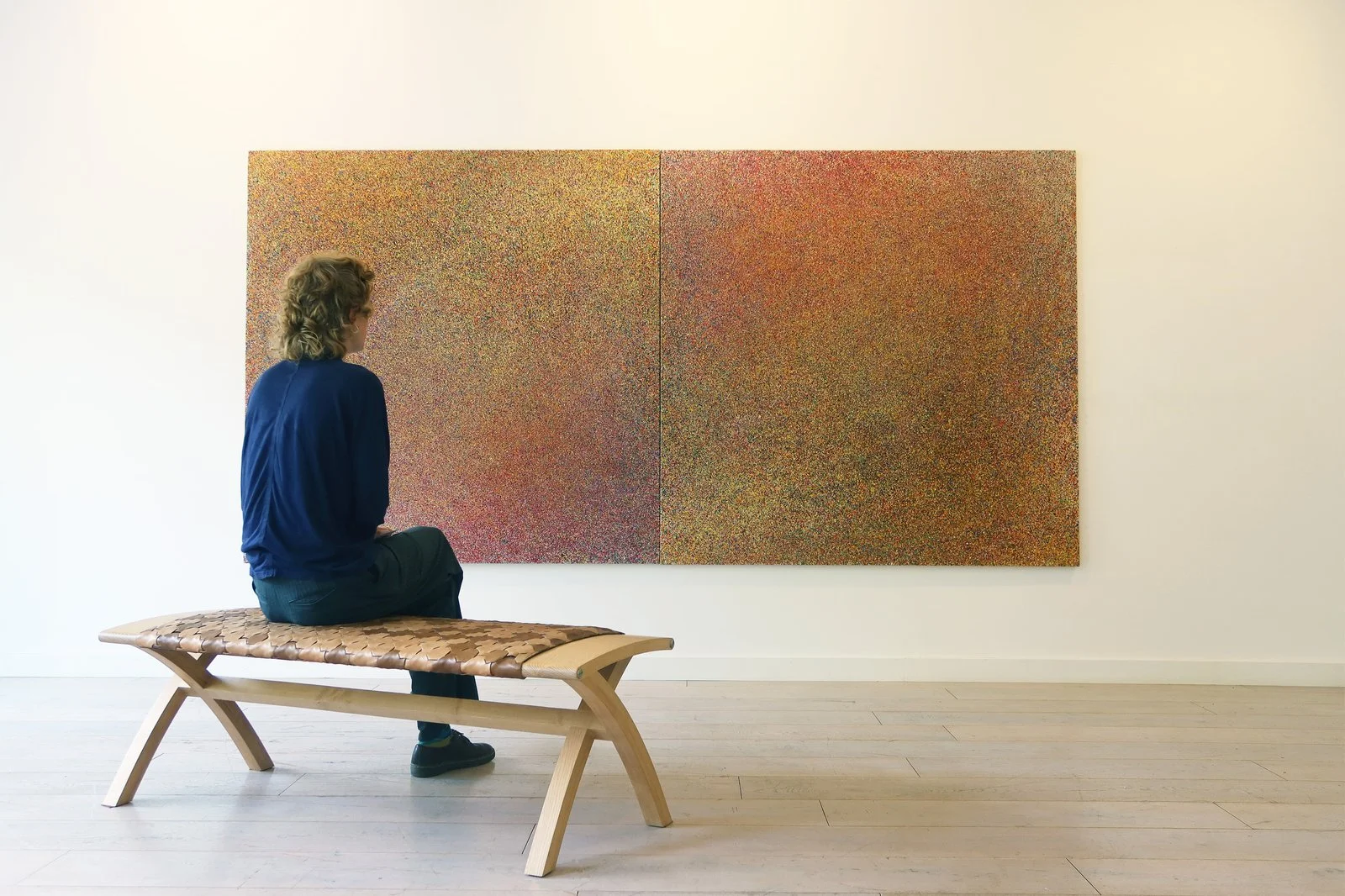
Ian Stephenson
Diorama SS.7.67
1967
Oil on canvas
122 x 244 cm
48 x 96 in.
In two sections
Diorama SS.7.67 is a record of a meticulously planned performance, with its subject becoming the act of painting itself.
The work comes from a pivotal time in Ian Stephenson’s practice, when he developed a process nearly as absorbing as its outcome; a methodical equation of applying paint to canvas by flicking in precise sequences. Diorama SS.7.67 is made up of two canvases, both almost identical in appearance but with one rotated 180 degrees. Stephenson moved around each canvas with metronomic regularity; measuring his steps and repeating the exact same paces around each canvas on the floor. Layering paint, dots covering dots to create an infinite, burning red expanse akin to stars in a galaxy.
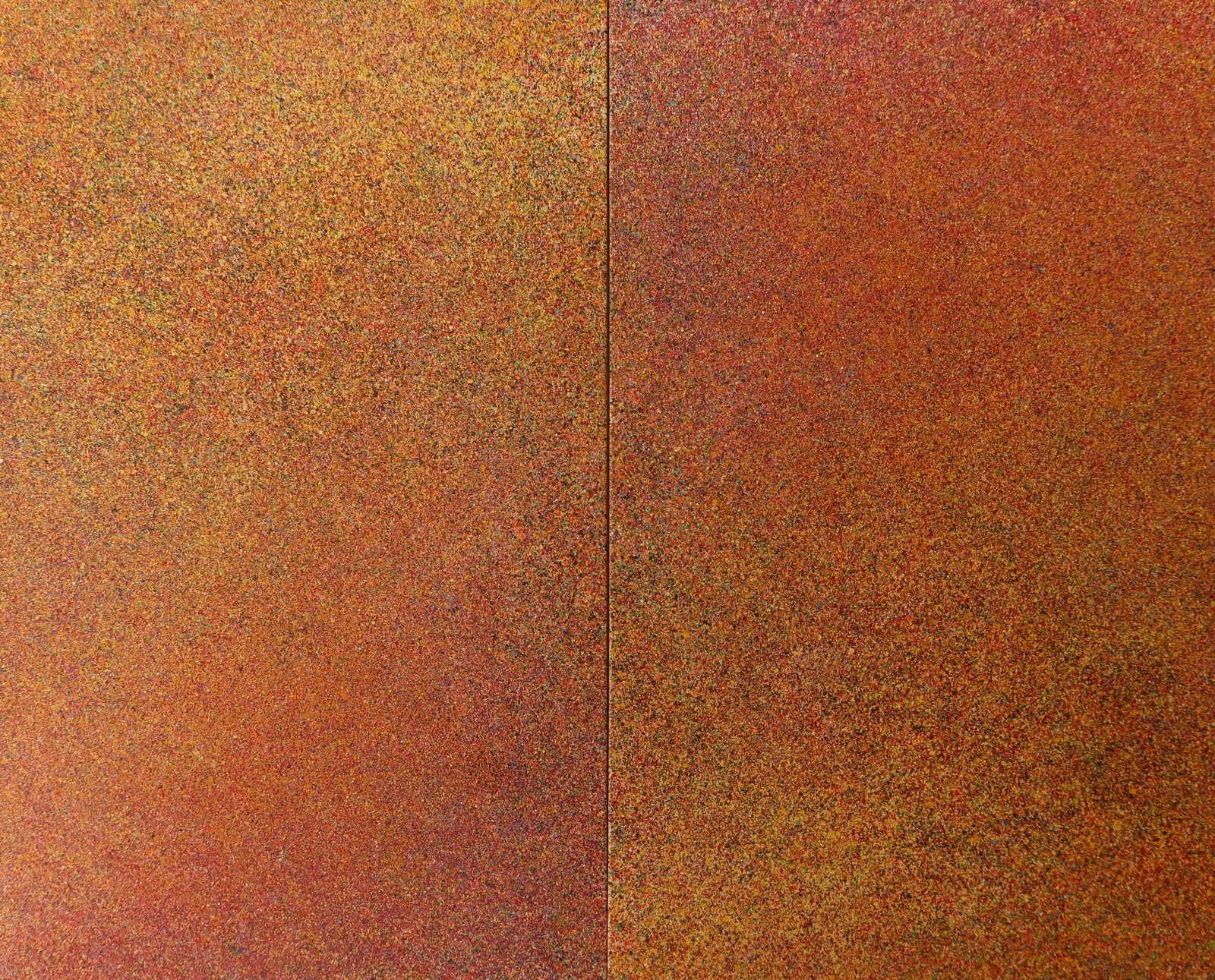
The work can be seen as a meeting point of precision and chance. Each canvas is painted following such a specific equation that Stephenson was able to almost remove human thought and emotion, and yet falling particles of paint would never land in the same pattern twice.
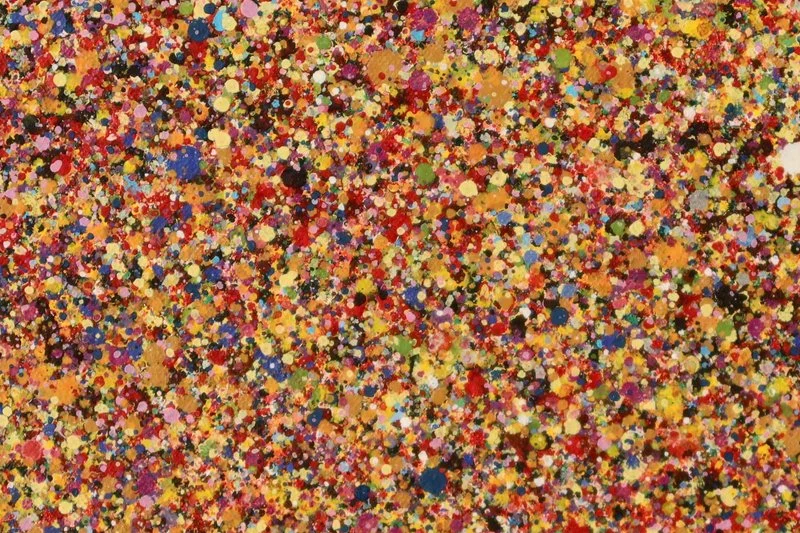
‘These great visions of flux offer the viewer both the sensation of a huge space and a surface covered with a seemingly uncountable number of dots of colour. There appears to be a coincidence of the infinite and the infinitesimal.’
- Chris Yetton in Planes of Heaven, 2026
Stephenson first showed with the New Art Centre in 1962 having recently arrived in London after completing the rigorous Basic Design course at King's, Newcastle, developed by Victor Pasmore and Richard Hamilton. Stephenson later turned down a place at the Royal College of Art in favour of becoming Pasmore's studio demonstrator. Stephenson is represented by 15 works in the Tate collection among many other museum and private collections internationally.
The next solo exhibition of Ian Stephenson's work will be held at the Hatton gallery, Newcastle upon Tyne with a major publication by Lund Humphries.