
WORK OF THE WEEK: Jacob van der Beugel
Jacob van der Beugel
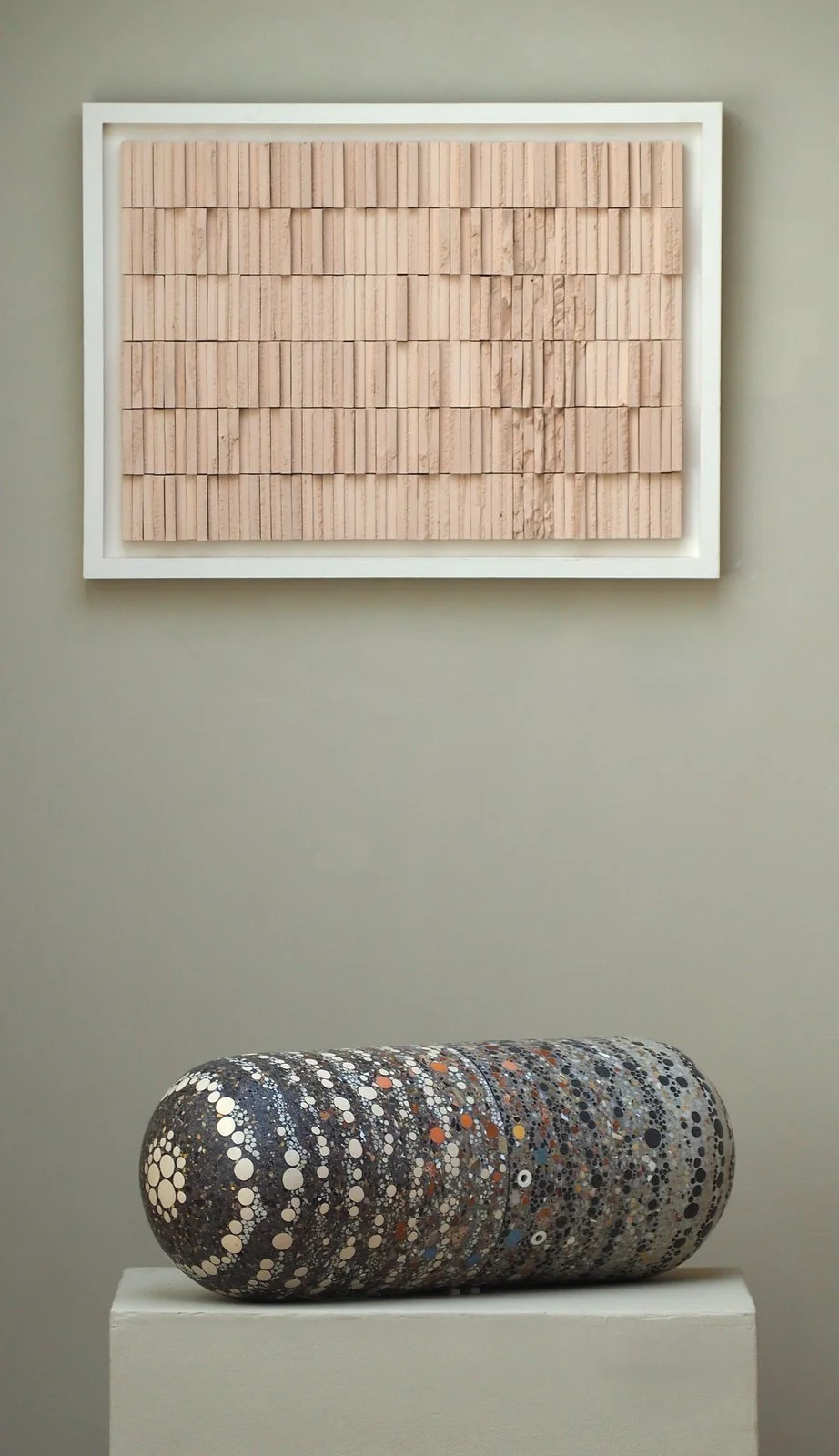
De-polariszumab 3
2025
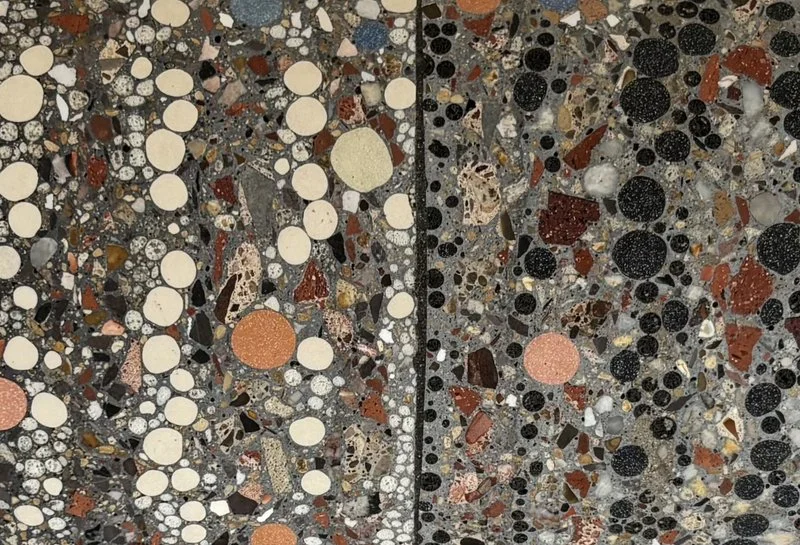
Self-healing concrete, recycled ceramics and aggregates
25 x 60 x 25 cm
9 ⅞ x 23 ⅝ x 9 ⅞ in.
(below)
Jacob van der Beugel
DNA fig1
2026
Stoneware ceramics
44 x 59 x 5 cm
17 ⅜ x 23 ¼ x 2 in.
(above)
Jacob van der Beugel's work interprets human identity and DNA, fusing materials to bridge the divide between science and art. De-polariszumab 3 seeks to mirror the polarisation that van der Beugel believes now embodies contemporary life. The black and white at the extremities of the form warm into colour in the middle ground.
De-polariszumab is a fictitious drug name van der Beugel uses in place of anti-polarisation. Akin to how a vaccine holds a disease within it, these 'pills' are symbolic antidotes to the polarisation they are illustrating. De-polariszumab is a series of 3 sculptures which are now on show in New Art Centre's Design House. Through differing materials and colour, each work explores the spectrum of ideological positions.
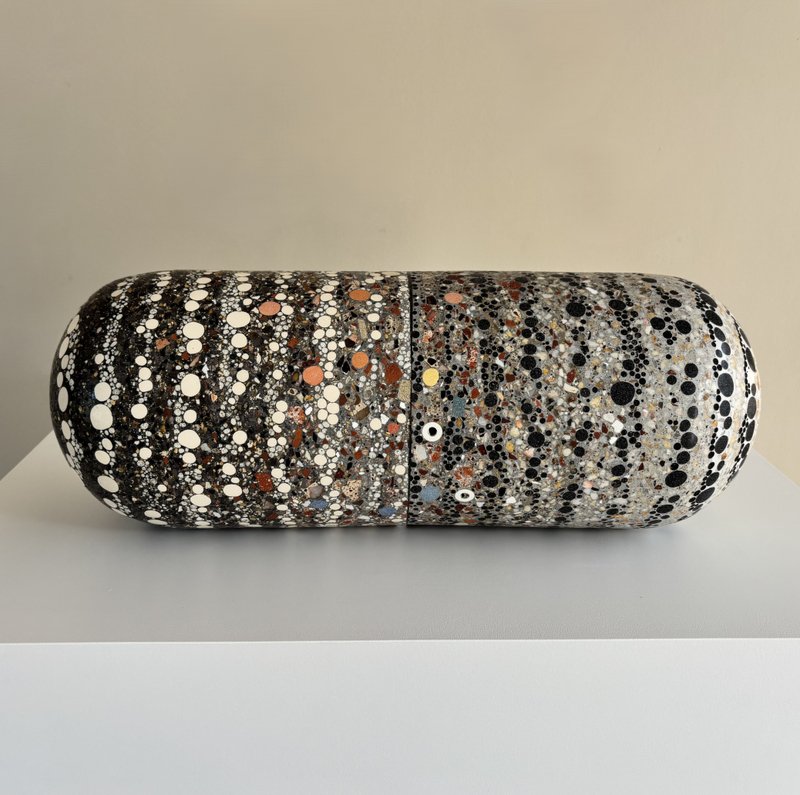
'This pill’s medicine is to push the idea that the middle ground is where life is colourful. Compromise is colourful because it requires seeing beyond ourselves.'
Jacob van der Beugel
De-polariszumab 3
2025
Self-healing concrete, recycled ceramics and aggregates
25 x 60 x 25 cm
9 ⅞ x 23 ⅝ x 9 ⅞ in.
Jacob van der Beugel is an artist based in Devon, whose work explores the connection between data science and our everyday lives. Using themes such as inheritance, ancestry, legacy and the self, his work transforms complex scientific information into abstract ceramic artworks. His work is widely held in museum collections and international private collections including a permanent installation at Chatsworth House. If you would like further information on Jacob van der Beugel, please enquire below.
A recently accessible film from van der Beugel in collaboration with co-director, Oliver Page, and philosopher and data scientist, Sabina Leonelli, examines notions of Data Shadows. The film casts a light on how research data make their way through human activities and non-human landscapes. It's premiere was at the Rio Filmpalast in Munich, 2025 and was supported by The Ethical Data Initiative, TUM Think Tank and Exeter University.
Data Shadows is the result of an artist residency at Egenis, the world-renowned institute of data science at the University of Exeter.