
WORK OF THE WEEK: Ian Stephenson, Thames, 1972
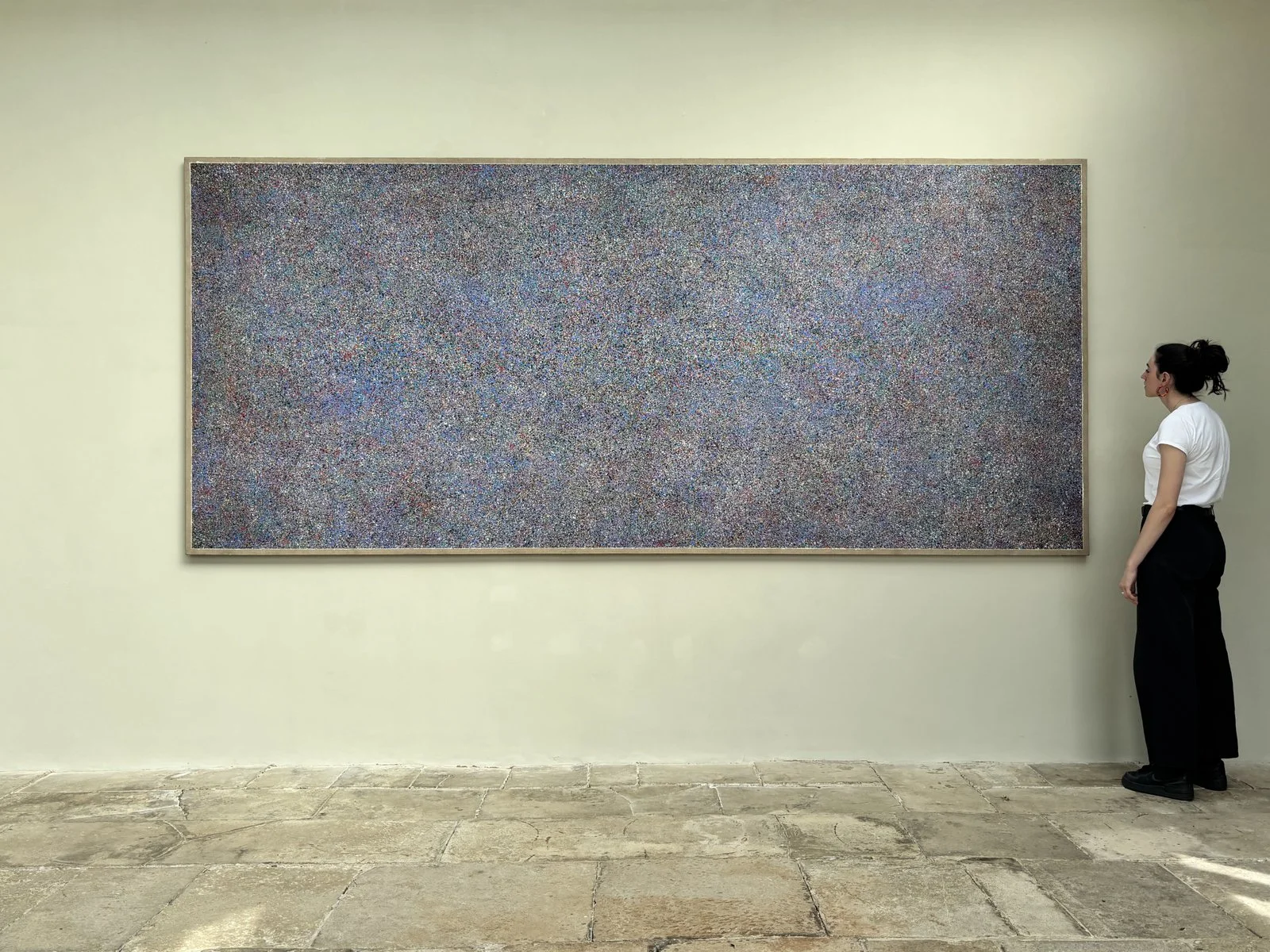
Ian Stephenson
Thames
1972
Oil on canvas
167.8 x 335.5 cm
66 x 132 ⅛ in.
On Saturday 20th June, the New Art Centre welcomed guests to the opening of Ian Stephenson: Planes of Heaven, a large scale exhibition sited across several galleries at Roche Court.
Ian Stephenson held a fascination with the advances of our understanding of the sciences, concepts of infinity and space at molecular level, met and mingled with his deep love and reverence for the Romantics. Thames belongs to a series of works Stephenson began in 1972 whilst he was Director of the postgraduate painting course at Chelsea School of Art.
Entitled Sandsend series from Beyond the World's End, it comprises four large canvas paintings, each accompanied by two smaller works on paper, which Stephenson called 'understudies'. These understudies did not inform the larger painting, but rather they were made retrospectively, with the intention of being displayed as a group. Thames, with its respective understudies, is being shown in the Orangery.
The titles of these four paintings that made up the series came from the stretch of Chelsea where Stephenson and his wife Kate lived. The titles also possess a number of literary, personal and Romantic references. Sandsend Lane is where Stephenson had his studio just past the Worlds End Estate. 'Sandsend' also pays tribute to the six mile length of beach at Blyth in Northumberland where he would walk as a boy with his father. Simultaneously, it refers to the beaches of the Thames that would appear at low tide when Stephenson crossed the Battersea Bridge on his way to paint. On this path, Stephenson ruminated 'where Turner used to enjoy the sunsets and contemplate his 'pictures of nothing'; where John Martin painted 'The plains of Heaven' and 'The Great Day of His Wrath' and where Whistler painted Nocturnes.' Thames is dedicated to these painters whom Stephenson loved, yet in his quintessential fashion, from this widely depicted subject he created something entirely new and profound.
Laying the canvas on the floor, Stephenson dropped paint from brushes to form conglomerations onto it's surface as he orbited the canvas. From a distance, hues of blue and purple appear most conspicuously, yet as we move closer to the work, drops in varying sizes of red, green, yellow, black, brown, gold and white emerge.
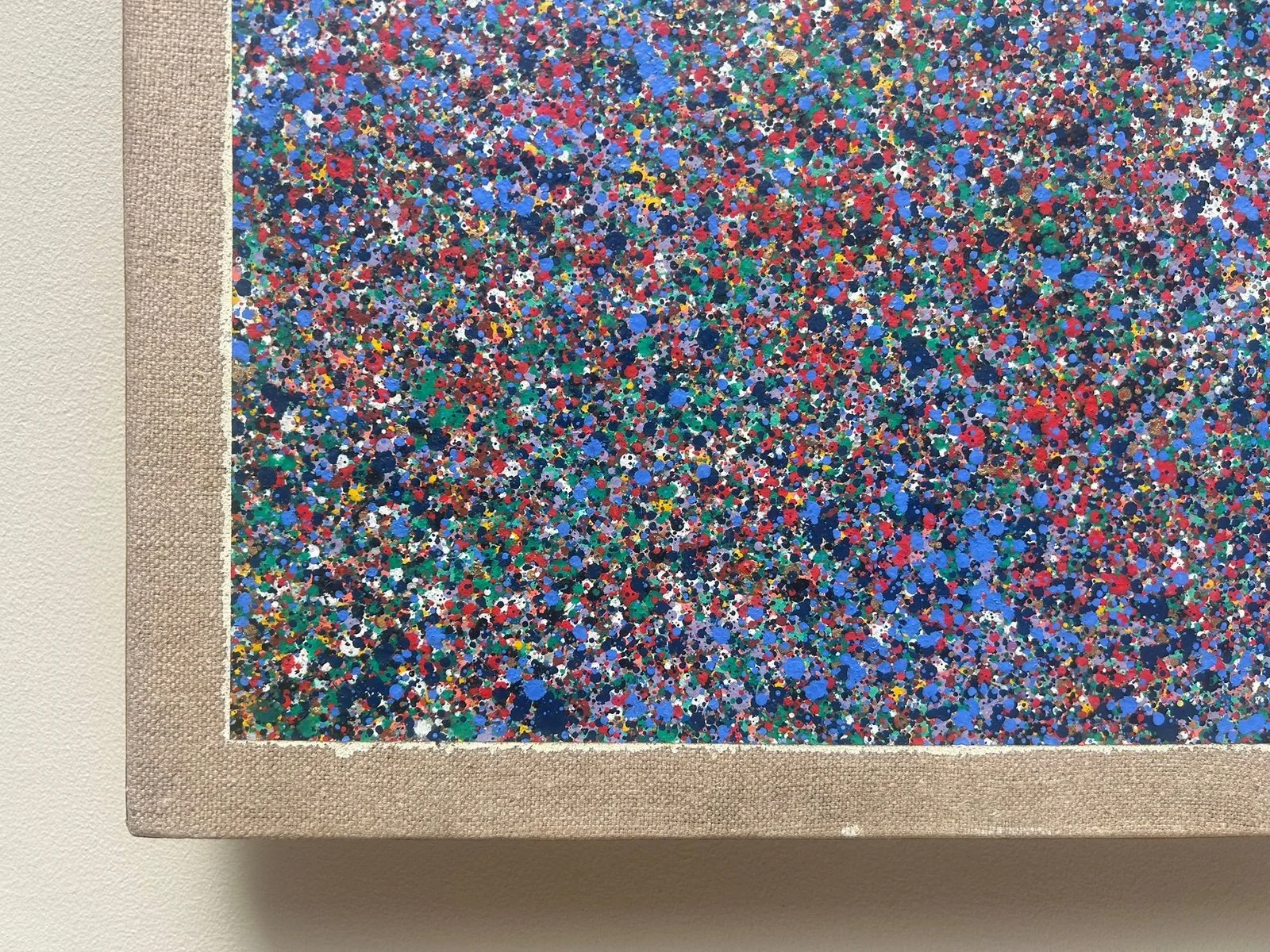
Ian Stephenson, Thames, 1972, Oil on canvas detail
Stephenson's earlier works explore the same concepts, such as the Quadrama series, on display in the Main Gallery. The paintings, when dried, were re-stretched onto smaller frames, so that the innumerable dots of paint stretched over the canvas, giving a greater sense of an expanding infinity. Thames on the other hand has a border, giving the sprawling mass of paint a definitive end.
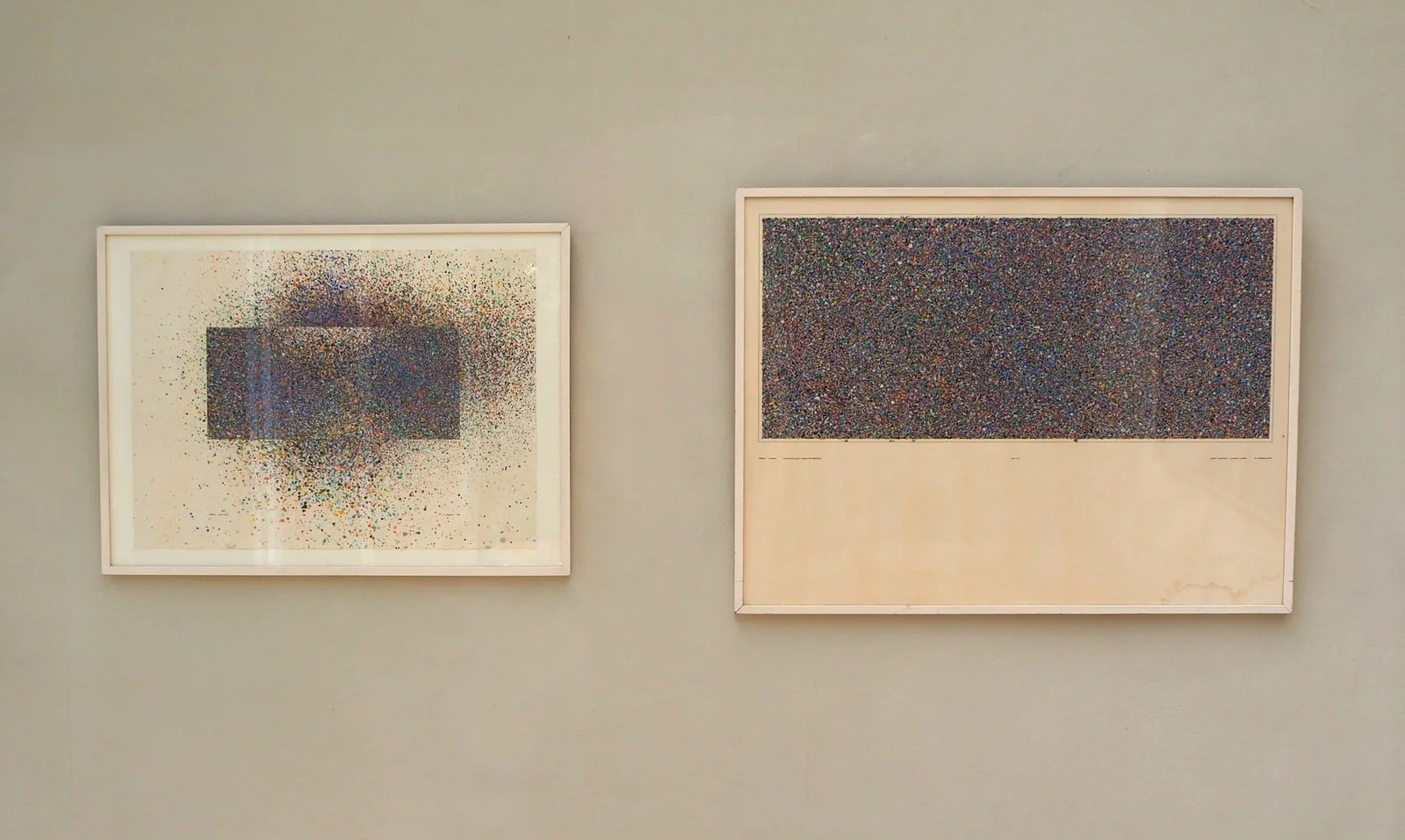
Ian Stephenson
Thames Understudy
1972
Signed, dated and titled
Oil and enamel on paper with collage
65.5 x 88.5 cm
25 ¾ x 34 ⅞ in.
Ian Stephenson
Thames Understudy
1972
Oil and enamel on paper
79 x 104 cm
31 ⅛ x 41 in.
The larger of the Thames Understudies equally has a border drawn around it, just outside the main body of paint, however the masking tape Stephenson used allowed for various marks to escape and reach towards the border. The smaller Thames Understudy is one of Stephenson's collages, comprising two elements painted separately, brought together thereafter.
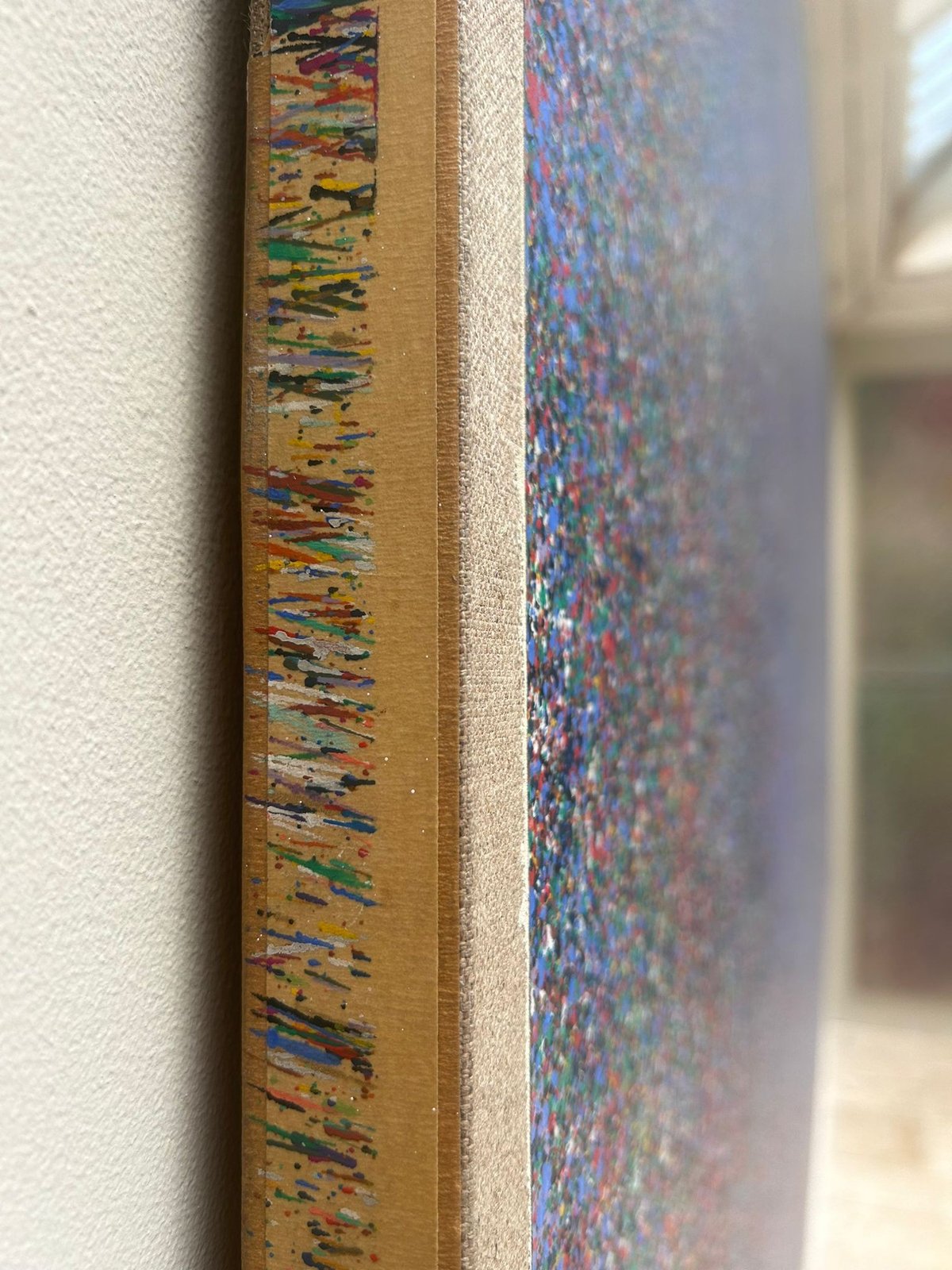
Ian Stephenson, Thames, 1972, Oil on canvas detail.
These three works, displayed and experienced together, provide a space in which one might contemplate the ethos of Stephenson's work: is the universe infinite or contained? And what is our place in this great expanse of existence?
'Imagine being on a sea, where its very dark and black and a light appears. You change direction and head towards it. But you can only see it from time to time. Its not known what is at the end or if there is an end...' Ian Stephenson.
We extend a warm welcome to all visitors to come and experience this exhibition, which will run until the 13th September. To book a visit, or to find out more, please enquire below:
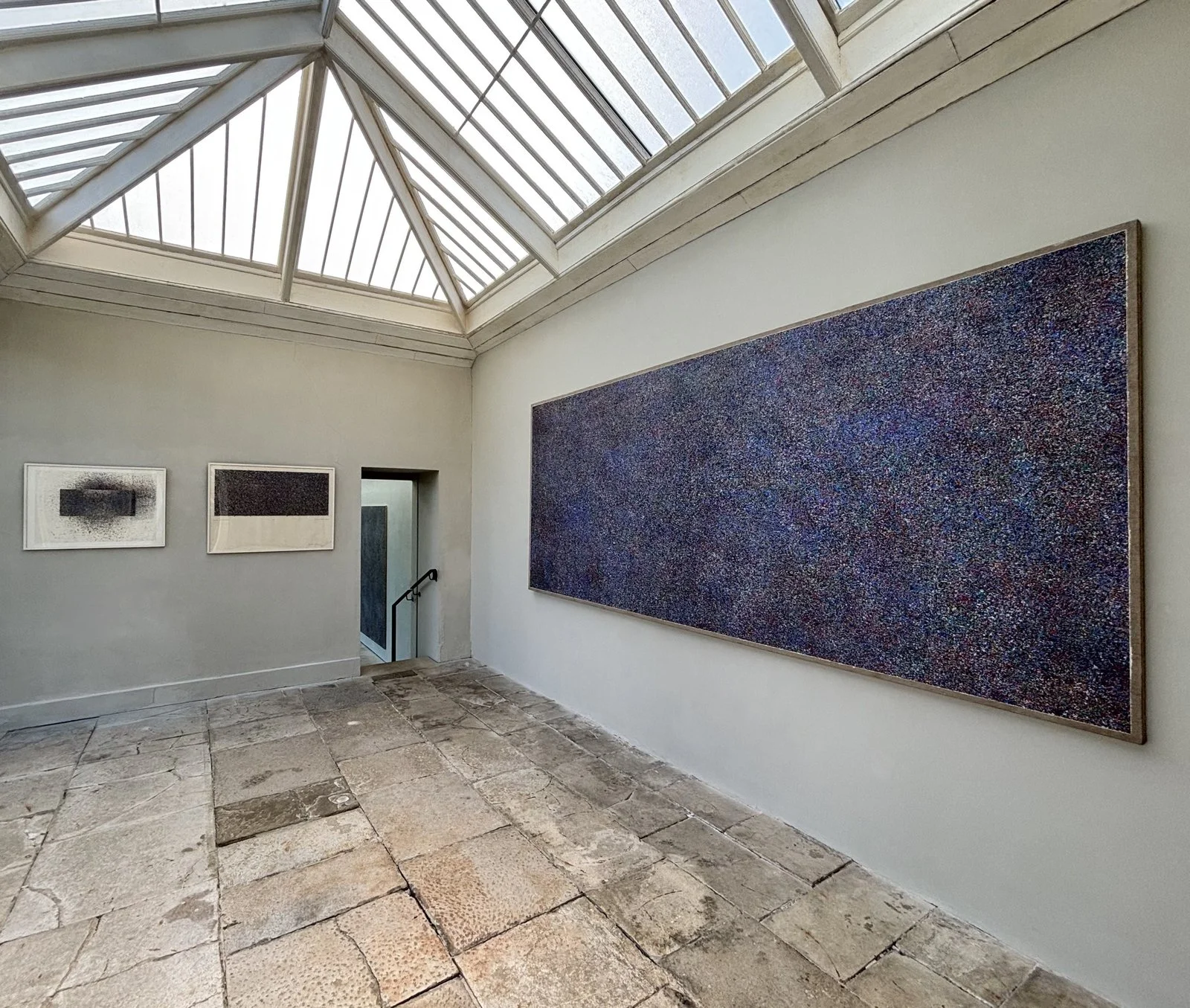
Ian Stephenson, Thames and its Understudies in the Orangery