
WORK OF THE WEEK: Victoria Rance, Pulpit, 2006
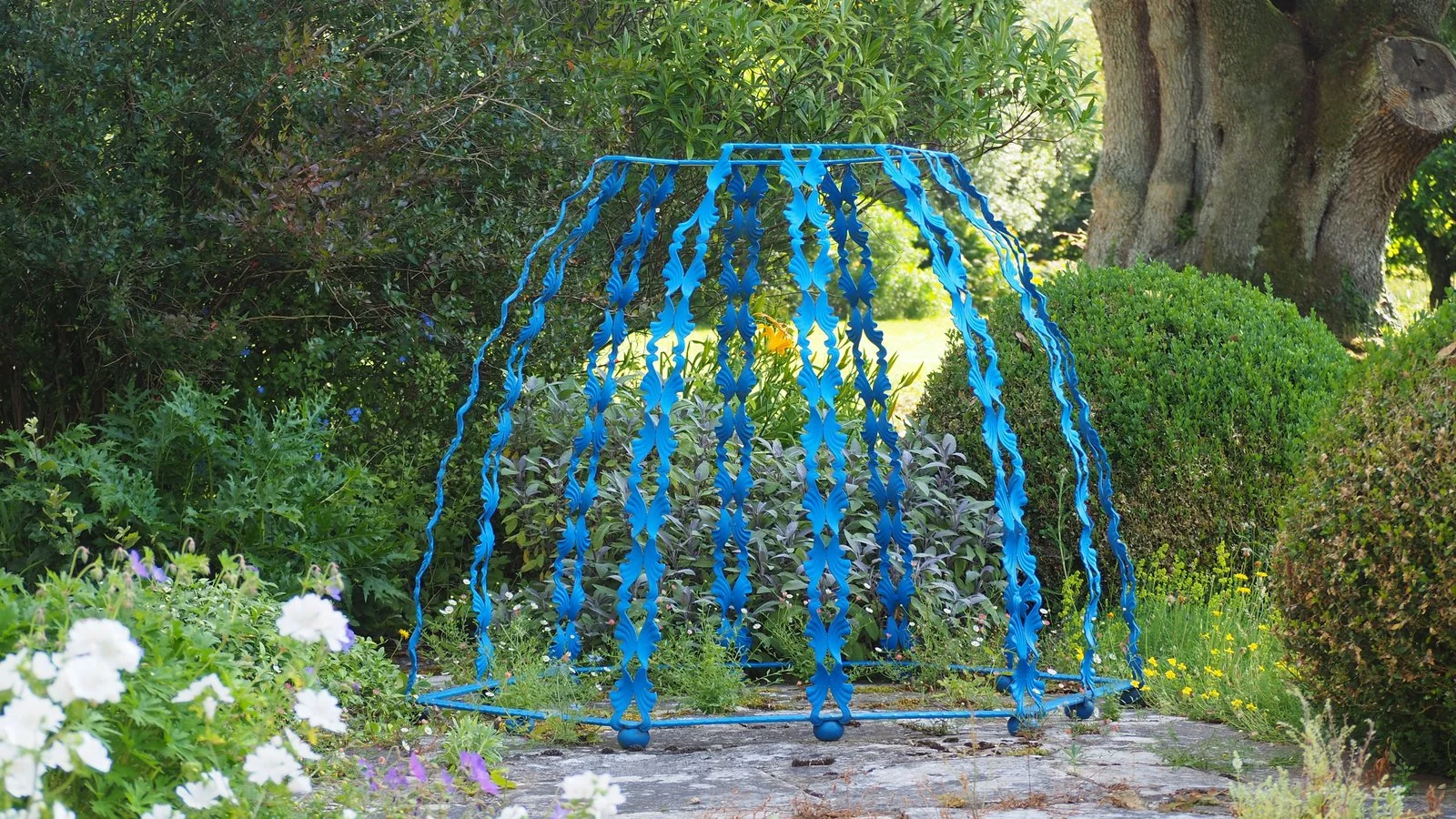
Victoria Rance
Pulpit
2006
Powder coated steel
106 x 145 x 145 cm
41 ¾ x 57 ⅛ x 57 ⅛ in.
Whilst studying and subsequently drawing the pulpits in Georgian churches along the Strand in London, Victoria Rance noticed that their height, form and style changed stylistically throughout the ages. Following the Reformation of the 16th century, pulpits were built high above the congregation; stressing the importance of scripture over the Eucharist, and lending the preacher an air of absolute authority. This architectural decision was most prevalent between the 16th and 19th century, during the height of Puritanism. Yet the late 19th and 20th century saw the Liturgical Movement encourage participatory worship. As such, pulpits became lower, so that those preaching would be closer to their congregation. Overlooking the lawn at Roche Court, and the sprawling landscape beyond, Rance’s Pulpit offers a place to address an ‘audience’. In Rance's words, the Pulpit is a “celebration of freedom of speech, and the joy of expressing ideas in words to others”.
Rance not only draws attention to the shift in the role of the preacher, but moreover she highlights the change from a previously male archetypal role. Since the late 20th century, women have been welcomed into preaching roles and subsequently permitted to use pulpits in churches. Rance highlights this through Pulpit's form, which references crinolines and dresses.
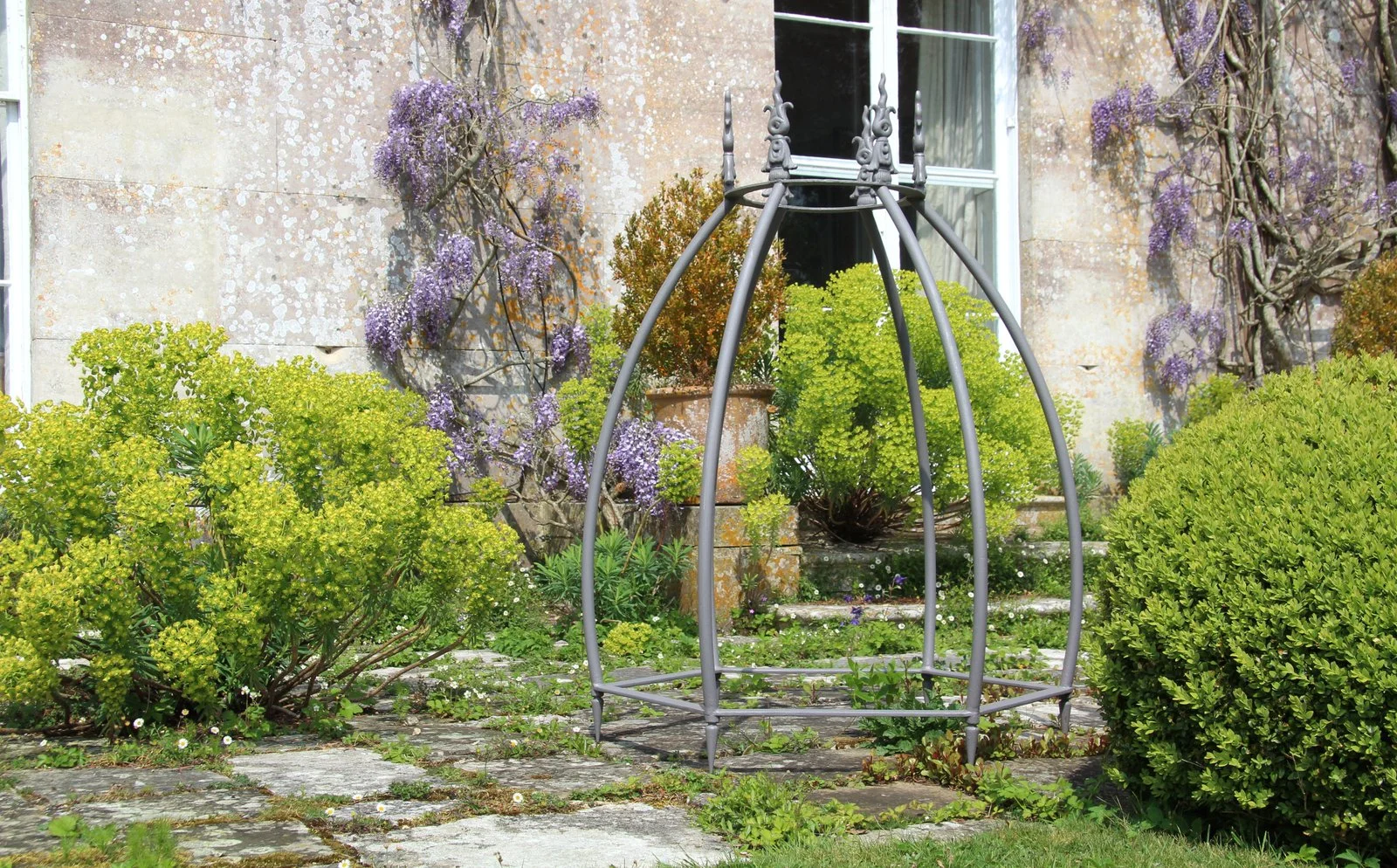
Victoria Rance
Martyr's Pulpit
2006
Painted steel and iron
137 x 103 x 103 cm
54 x 40 ½ x 40 ½ in.
Martyr’s Pulpit was made after Pulpit and serves as its counterpart. Made from iron and steel, painted with micaceous iron oxide, its colour is grey and sombre, as opposed to Pulpit being bright and celebratory.
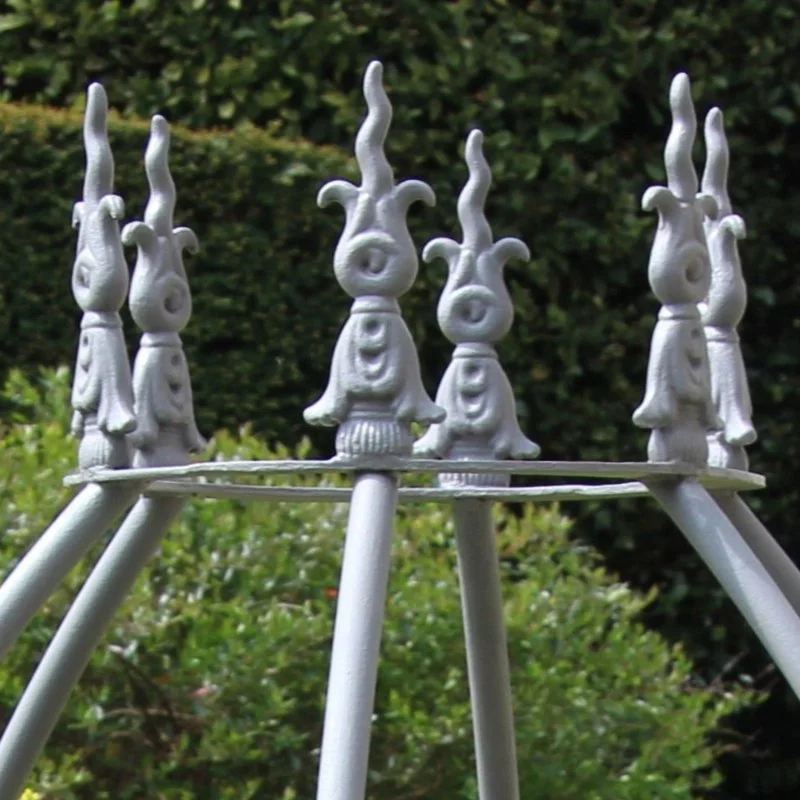
Contrasting Pulpit's ease of access, Martyr's Pulpit is a sealed unit. It speaks to the dangers of religious extremism and fundamentalism.
The crown of flaming figures refer to the glory of a martyr's death, whilst the overall shape mimics that of weapons and missiles. Rance made this work in response to the Iraq War (2003-2011) and the London terrorist bombings (2005). Twenty years on, Martyr's Pulpit remains painstakingly relevant, encouraging introspection towards the beliefs and rhetoric surrounding us.
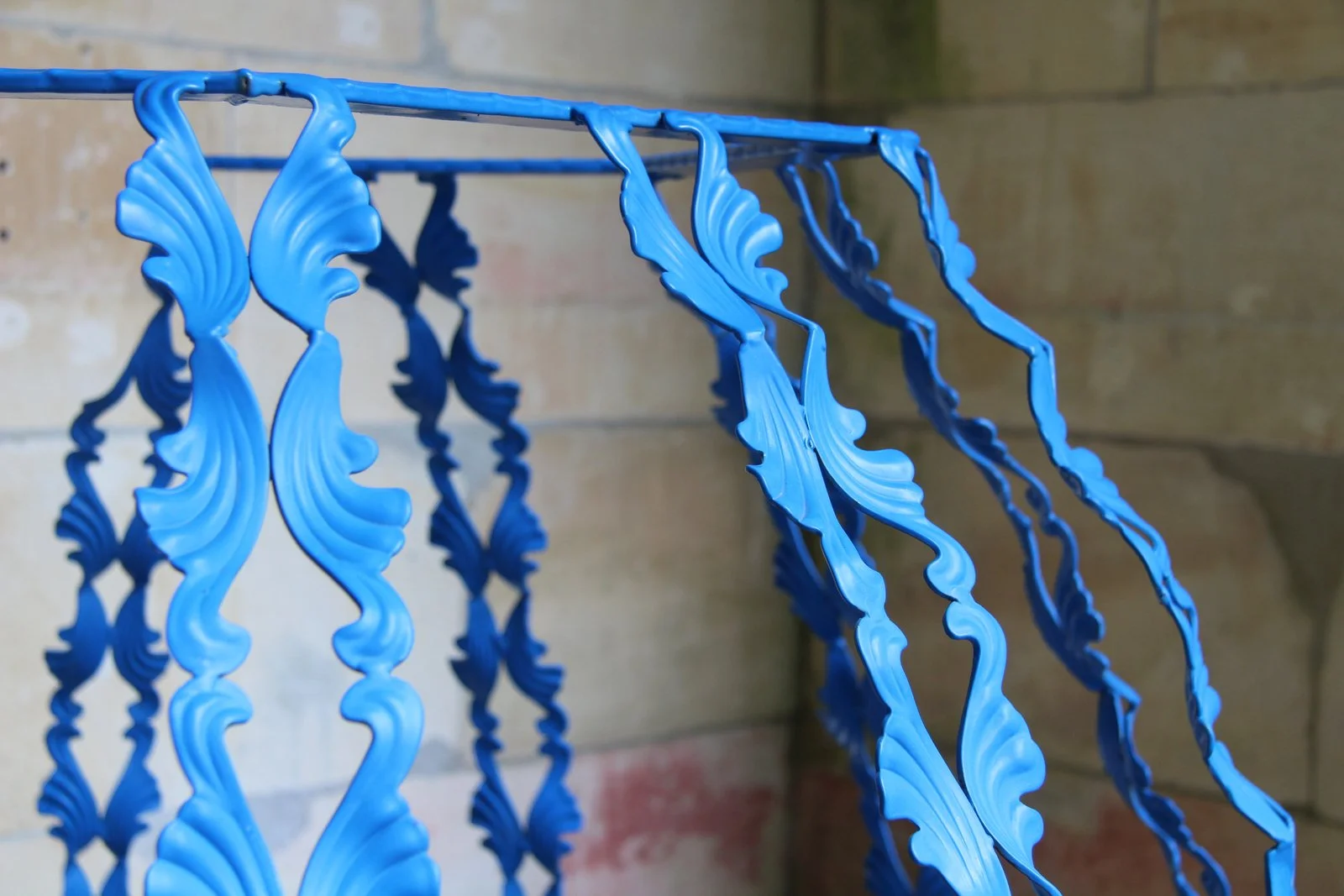
Victoria Rance, Pulpit, 2006, detail.
Contemporary Artists and the Sacred Space is a series of interviews with artists focusing on their commissions for places of worship in London, England. Click here to watch Victoria Rance's interview with Tyler Rollins and Laura Moffatt, where they explore Rance's work, Comforter (2008). rituals of light... landscapes of time opened at EULENGASSE, Frankfurt, Germany on the 10th July. The exhibition Handbags shall open on the 22nd August at Cable Depot, Sofia, Bulgaria and at Bianca Boeckel Galeria, São Paulo, Brazil.
Victoria Rance graduated with a BA honours in Fine Art from Newcastle University in 1983, and subsequently an MA from Kingston University in 2009. Based at APT Studios in Deptford, London, Rance received the 2003/4 Mark Tanner Award for Sculpture. For more information on Victoria Rance, please enquire below: