
In the Design House, Stephen Marshall Architecture
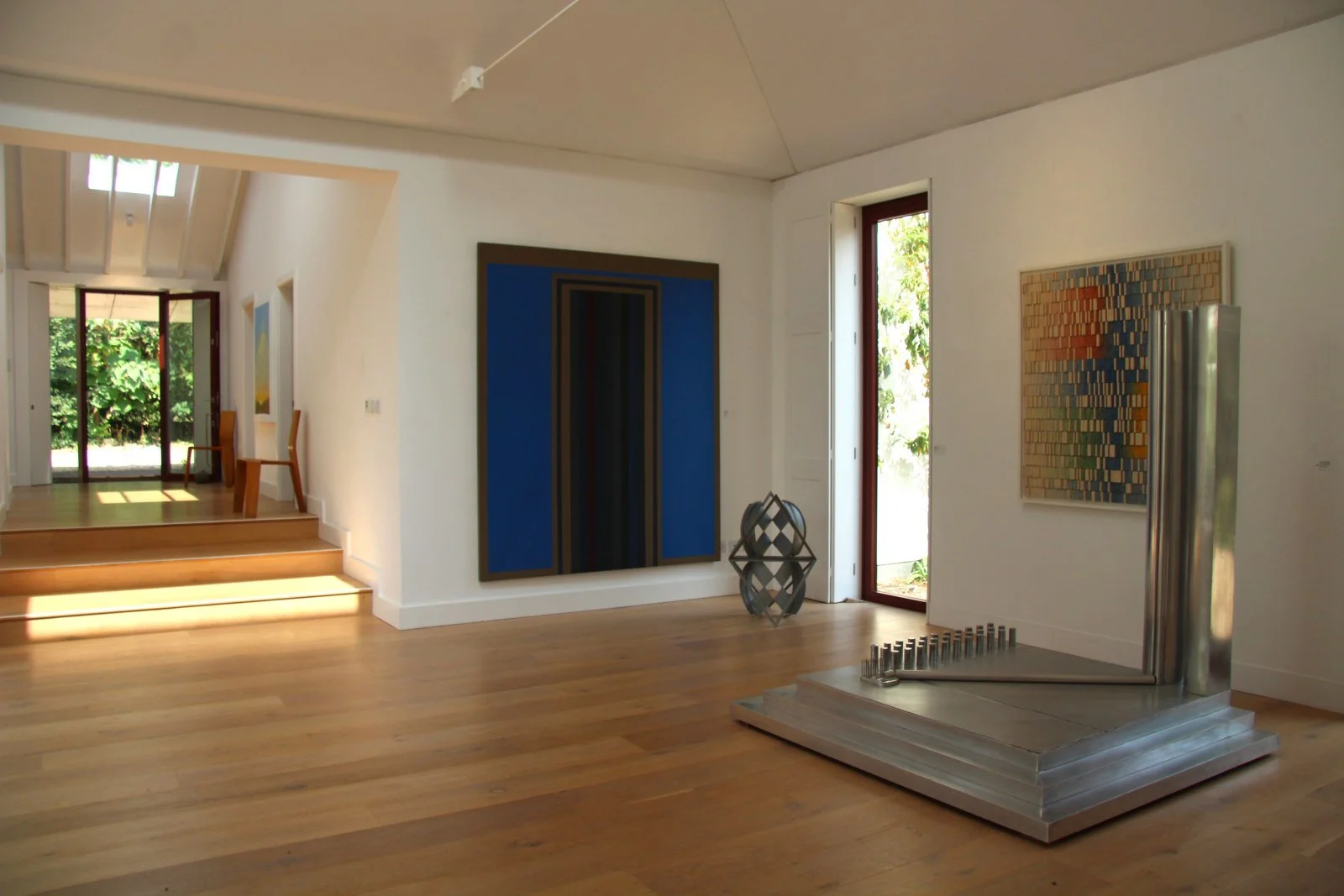
The Design House
'Stephen Marshall sees Roche Court as something of a turning point in the way a small number of individual architectural elements were refined into a vocabulary that was the basis of a fairly formal language that worked functionally and aesthetically.'
- Colin Amery, 2016
In 1997, Madeleine Bessborough discovered a publication of Stephen Marshall's domestic work. She had a vision for new gallery spaces at Roche Court, yet needed to find an architect who could incorporate the beauty of the 1804 regency country house with novel architecture. Lady Bessborough was immediately taken with Marshall's sympathetic style and the ways in which his modern designs perfectly compliment existing sites, and commissioned him to design the New Art Centre's main gallery.
Since then, Marshall has designed three exhibition spaces at Roche Court: The Artist House (2000-2001), The Cube (2008) and the Design House (2018). As a result, the spaces at Roche Court work in unison to exhibit art with a harmony that, despite existing in separate buildings, emulate the feeling of one gallery.
‘There's lots of opportunities for putting small spaces in which you walk to via the gardens, so you would walk through the gallery and across and up and down. That's the huge fun and pleasure of Roche, it’s the way that the galleries work with the garden.’
- Stephen Marshall
On his first visit to Roche Court, Marshall was struck with its unique beauty, tucked away in the rolling valleys of Wiltshire. Here he met Lady Bessborough, who shared with him her vision, which, over the years, he has executed with the utmost precision and dedication.
'The most important thing in all architecture is the client. You've got to have somebody who's flowing the same way as the way the project is going, with Madeleine, it was an absolute delight from the moment I met her. She is incredibly knowledgeable about art and architecture.' - Stephen Marshall
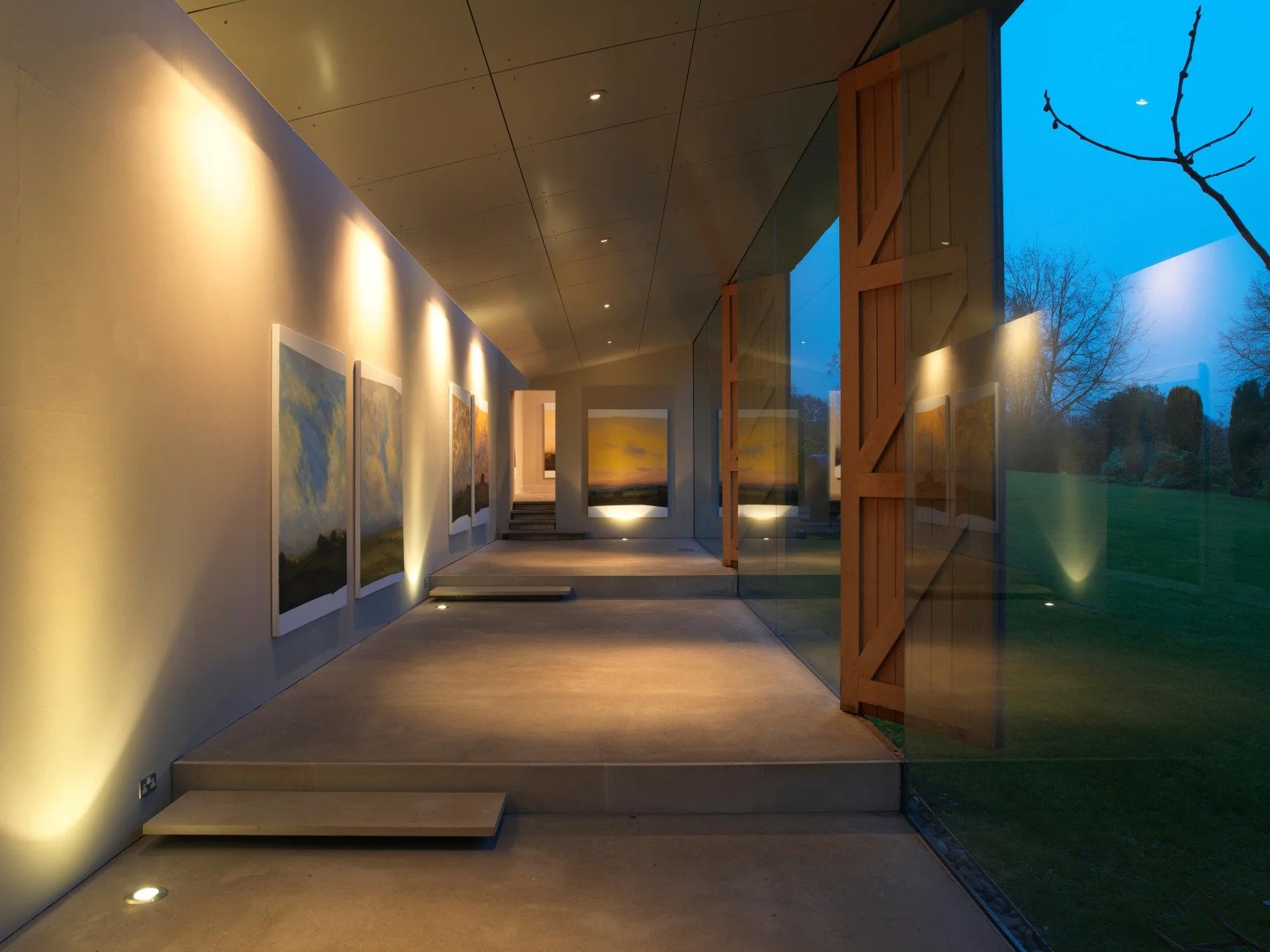
The Gallery
Paintings by Peter Frie
The Gallery (1998) at Roche Court was built between two existing listed buildings: the main house and the orangery, where there was a gentle, uphill slope. As such, the gallery ascends to the orangery in sectioned platforms, allowing for focused spaces within this open space. The floor is concrete, emulating the feeling of a garden space whilst paying homage to Roche's farm yard.
From conception, Marshall knew the wall of the gallery facing the park had to be clear. It is made of large, single sheets of glass, with small gaps between them corresponding to the levels of the gallery. The single sheets create a perfect reflection of the park from the outside, as opposed to a slightly skewed representation that double glazing would offer. Simultaneously, from inside the gallery, the frameless, single-glazed glass offers a feeling of immersion in the park, a mixture of outdoors and in that is emulated in all of the spaces Marshall would go on to build here.
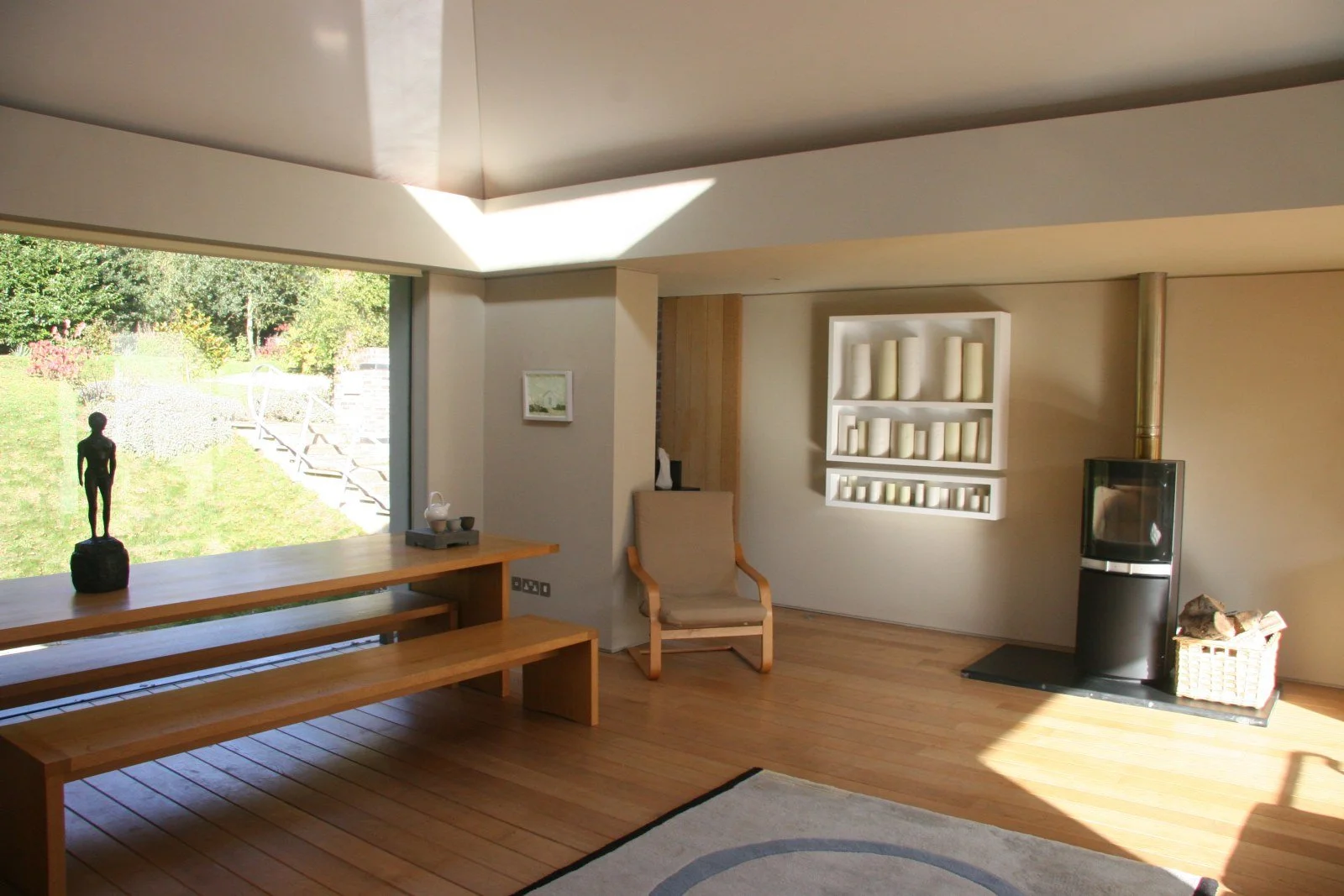
The Artist House
‘All the artists that get asked to show work in The Gallery or the Artist's House, they seem to quite like doing it. They like having their work shown in those kinds of spaces. It's natural light, it's natural materials. The building is the background. It isn't trying to say, ‘hi, I'm here’ at all. That's just not what it's about.’ - Stephen Marshall
The Artist House (2000-2001) was designed as a residential gallery for artists to work in and exhibit their art. Taking inspiration from Kettle's Yard, The Artist House borders the courtyard, opposite The Cube, it is a dynamic space that feels secret and treasured. The Artist House currently exhibits the work of Barbara Hepworth, Edmund De Waal, Mary Potter, Nao Matsunaga, David Ward and others.
Whilst the downstairs space offers a series of rooms in which the New Art Centre can spotlight the work of individual artists, when one travels up the oak wood staircase, they step into one open room, filled with light from the floor to ceiling windows. Large oak balcony doors open up into the courtyard below, allowing a circulation of soft breeze in the summer months. Small alcoves showcase the work of Bill Woodrow and Edmund De Waal, whilst Katie Walker's functional Hoop Chairs invite one into this serene space. The windows are also single-glazed, offering a view in from the courtyard and the adjacent staircase that leads up to the walled garden.
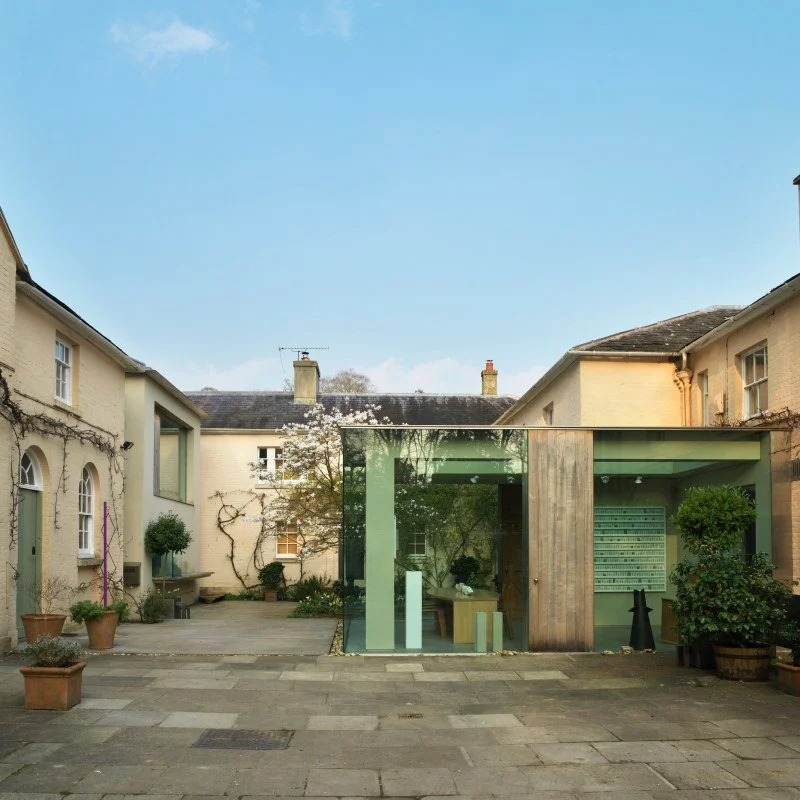
The Cube
The Cube (2008) was an addition commissioned by Lady Bessborough to extend the kitchen, to accommodate for the large number of guests at exhibition openings. However, she wanted to preserve the openness of the courtyard. Apart from the two, large oak doors at either side, it is made from glass that ‘glides past the rendered frame of the building, making it appear as though there is no glass and the inside/outside sensation is maximised.’ (Stephen Marshall)
The ceiling is made almost entirely of glass, so that when it rains, the water bounces and pools on the roof, urging us to look heavenwards.
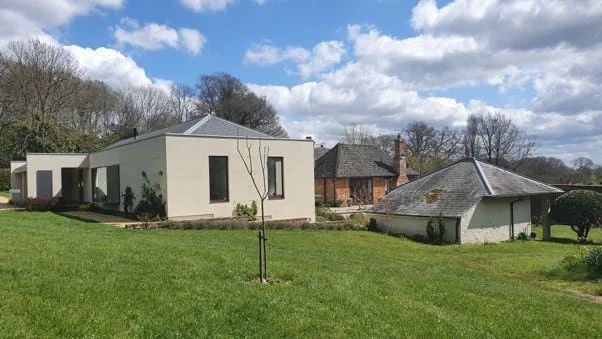
The Design House (exterior)
The Design House (2018) in its conception is unlike any of the other spaces at Roche Court. It was in fact designed to be a house for Lady Bessborough, but as construction was coming to a close she thought that instead it could work very well as a gallery. Marshall had worked on the original cottage some 15 years prior, opening up the roof and fitting a skylight that remains there now.
‘So there, the idea of that building was you don't bring in a whole new kind of vocabulary, you look at what is there, and then you see how you can use it to make the rooms, et cetra. And it's a strange little building, because it's strange how the size of a bedroom just about works as a small gallery.’ - Stephen Marshall
Coincidentally, certain architectural choices render the space as ideal for exhibiting art. The windowsills come inside instead of out, allowing for artworks to be displayed on them, bathed in natural light. The small 'bedrooms' offer intimate spaces with a small number of artworks in each, encouraging the viewer to slow down and take their time with each piece, rather than being rushed and overwhelmed by large numbers of people and artworks.
‘I think, really, some of the best houses that have ever been built work could work, and actually do work, brilliantly as galleries.’
- Stephen Marshall