
Jacob van der Beugel
Roche Plate
Ceramic plate
Diameter: 10½ inches
Diameter: 26.3 cm
Jacob van der Beugel
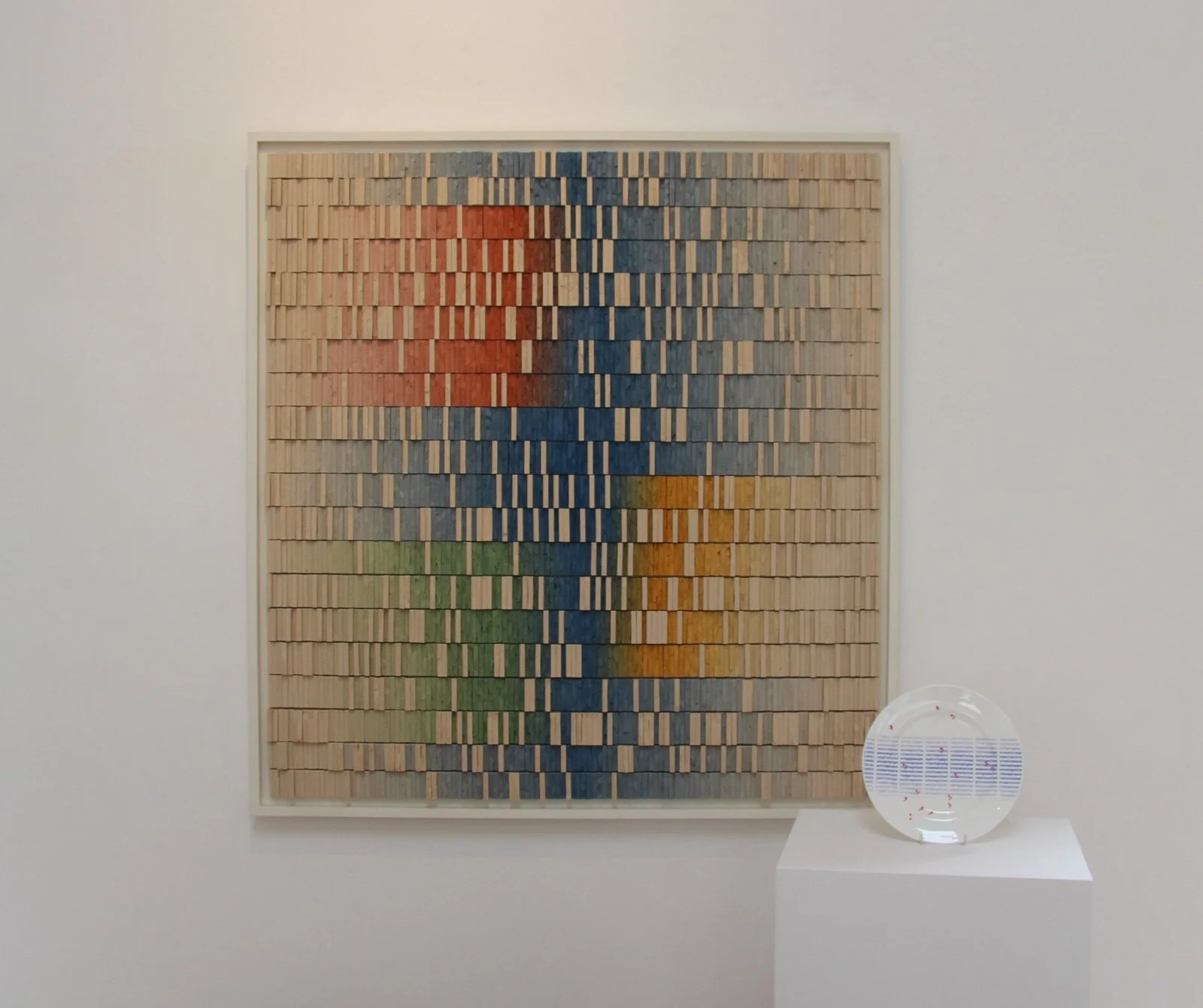
Cut and Paste 2, 2023
Ceramics, wooden frame
120 x 130 x 5 cm
3ft 9¼ x 4ft 2⅛ x 2 in.
Roche Plates are bespoke pieces of functional sculpture, designed in collaboration with artists who have a long-standing relationship with the New Art Centre. Jacob van der Beugel's first exhibition at Roche Court, Wherever the two shall meet, was held in 2023, however his work has been displayed here since 2016. After graduating from York University with a BA in History of Art (2001), he spent a year apprenticing under Rupert Spira. He was then an assistant and apprentice to leading UK ceramic artist, Edmund de Waal. With the knowledge and skills acquired from this rich education, Van der Beugel creates mesmerising and nuanced works in ceramic and concrete to 'depict the human condition' (Jacob van der Beugel). By using clay and concrete to represent genomic sequences, he bridges the divide between information and the physical world.
In Cut and Paste 2, van der Beugel tackles the public perception of gene editing. The panel depicts the genes associated with engineering biofuels, tackling diseases, and producing food that is increasingly disease resistant. To find out more about works by Jacob van der Beugel, please enquire below:
Jacob van der Beugel
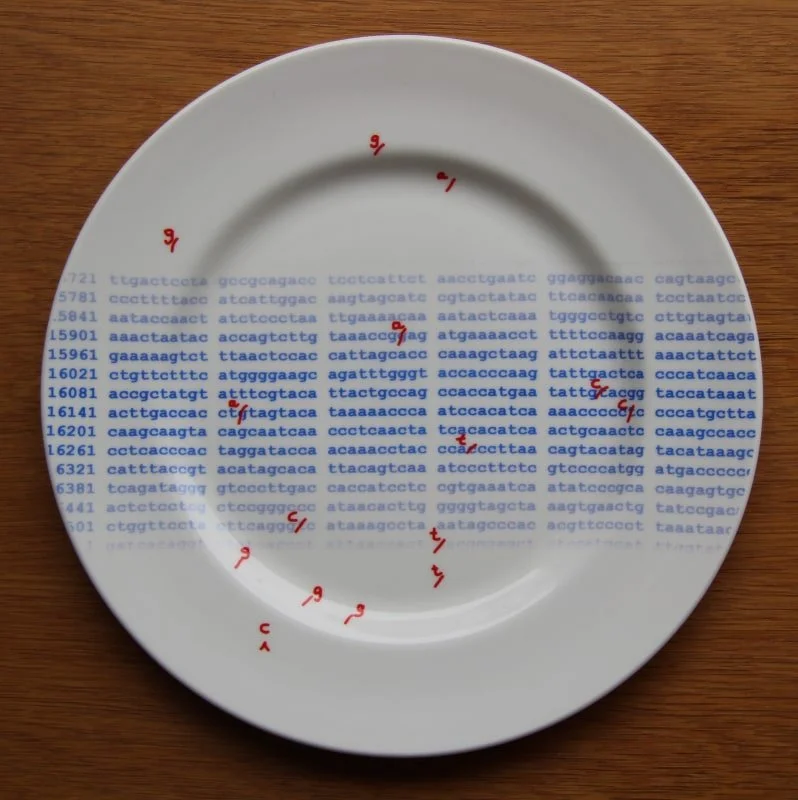
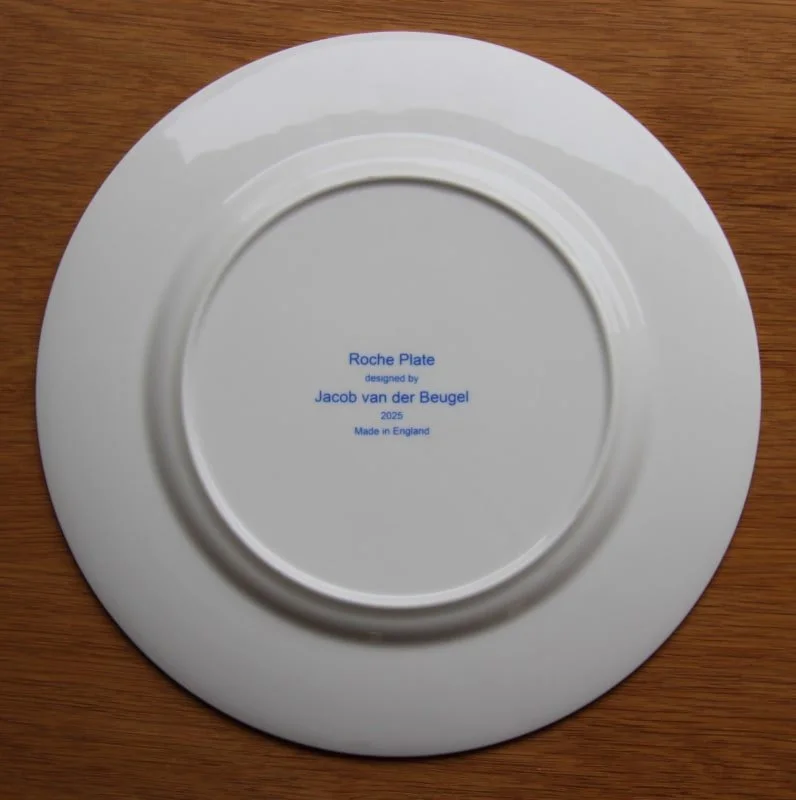
Roche Plate
Ceramic plate
Diameter: 10½ inches
Diameter: 26.3 cm
'Mitochondrial DNA is passed from mother to child. It is the most conserved region of the genome and therefore we learn a lot about our ancestry from this DNA.
The hand-drawn red scribblings are where my DNA differs from other peoples’. It makes me who I am. I am different but also so similar.
The unique hand drawn corrections are in contrast to the digital DNA background sequence. I am not only a sequence.
Mitochondrial DNA is circular as is the plate.
The colours fade and change in colour because sometimes we get lost in data. Scribbling over the digital sequence is a way of reclaiming.'
- Jacob van der Beugel
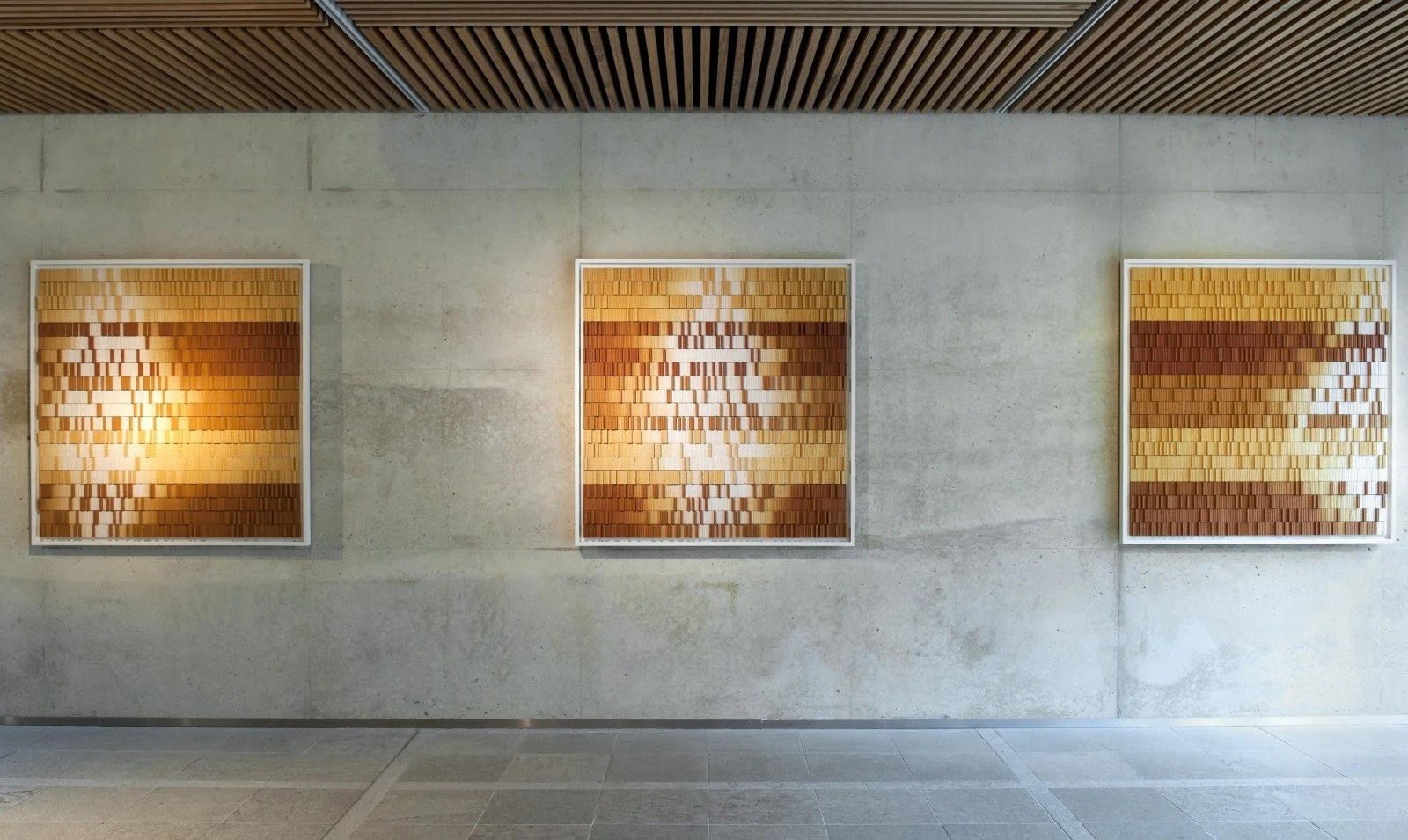
Photo: Courtesy of the Artist
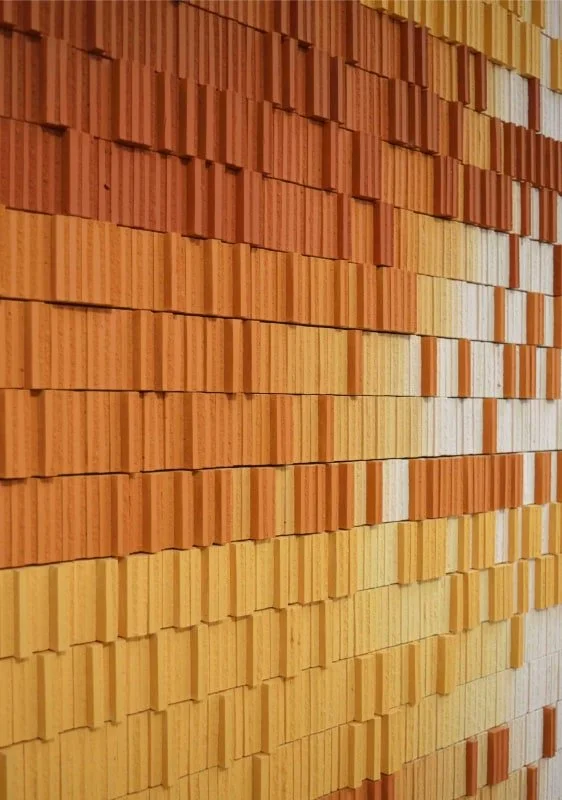
Photo: Courtesy of the Artist
The New Art Centre would like to highlight these pieces by Jacob van der Beugel; Memories 1,2 and 3, on display at Haberdashers' Hall, London. The Hall is home to beautiful art and sculpture, such as Henry Moore's Draped Reclining Figure and Bridget McCrum's Merlin. The Haberdashers Company is a vibrant network of schools spanning 12,000 students that seeks to uplift and empower young people, with the Hall at its heart. Here, the community gathers to share in their work and learning; each school puts forward the artwork of their students to be selected for the gallery on an annual basis. With them, we share a crucial mission: teaching and inspiring the younger generations with contemporary art and sculpture. As such, Jacob van der Beugel's Memories are a vital edition to this space, highlighting the connection between art and science, they inspire novel ways of thinking to young minds. The panels comprise concrete and ceramic blocks, the dimensions of which serve to represent scientific concepts. As van der Beugel explains:
‘This artwork investigates the complexity involved in creating memories. Whilst scientists know a considerable amount about how we form memories there still seems a huge gulf between the role of biochemistry and the real lived experience of having a memory.
The Memories series depict 5 genes that scientists know are important in learning, memory formation, and memory consolidation. These genes are represented by the protruding larger ceramic blocks. The fading to white of the background ceramic blocks represents the memory. In this way when we look at the white illusive memory, we see the protruding colours of the genes. This presents the viewer with a paradox. The more we focus on the material biochemical processes of a memory or the genes involved, the more abstract and ghostly the memory becomes.
These artworks, whilst acknowledging the crucial role of biochemistry, also guard against this reductionist approach to memories. They encourage us to think about memories in a less prescriptive way, subject to context, history and a unique moment in time.’
To find out more about our programme, or to book a tour with The Roche Court Educational Trust, please email groups@sculpture.uk.com or enquire below: