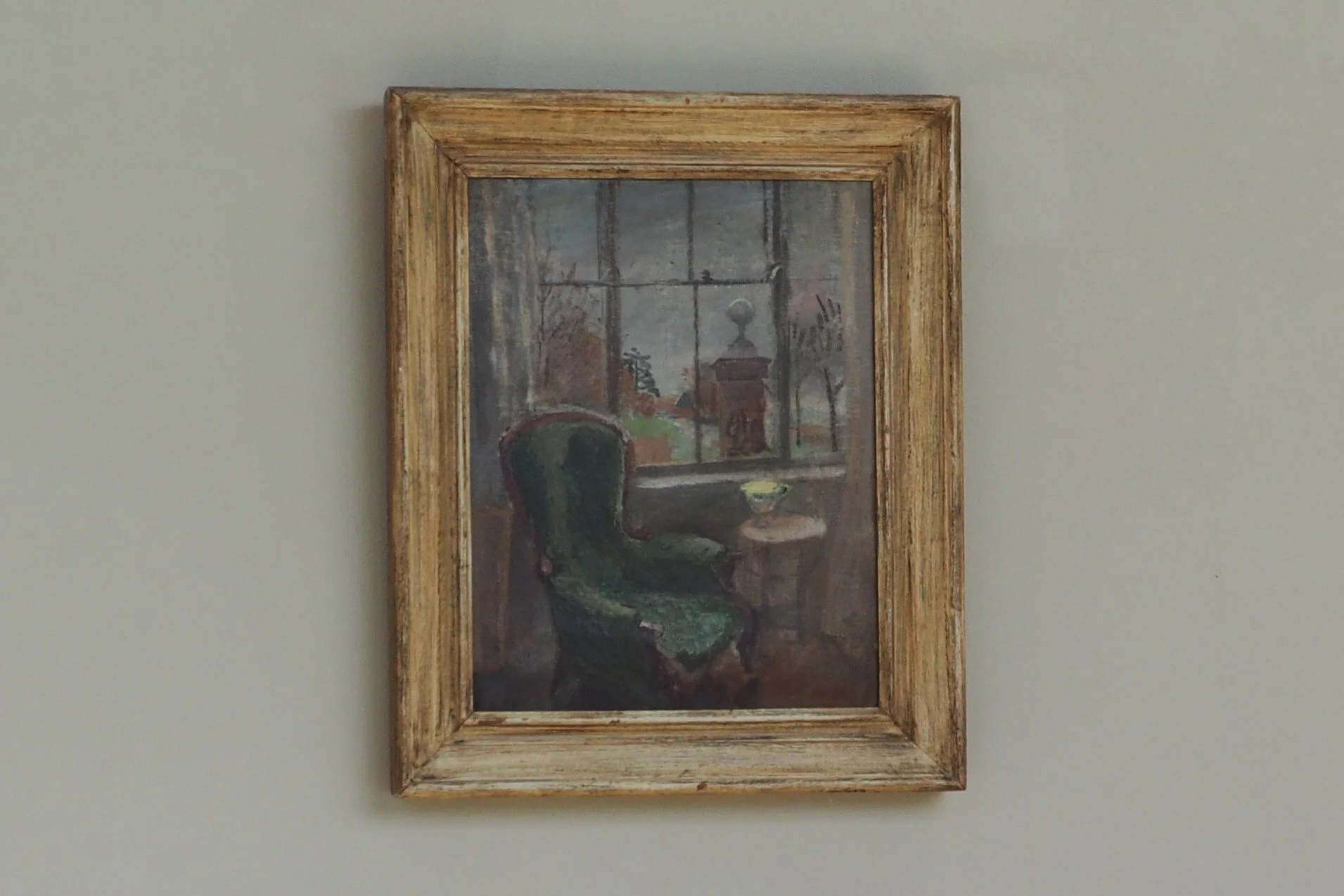
WORK OF THE WEEK
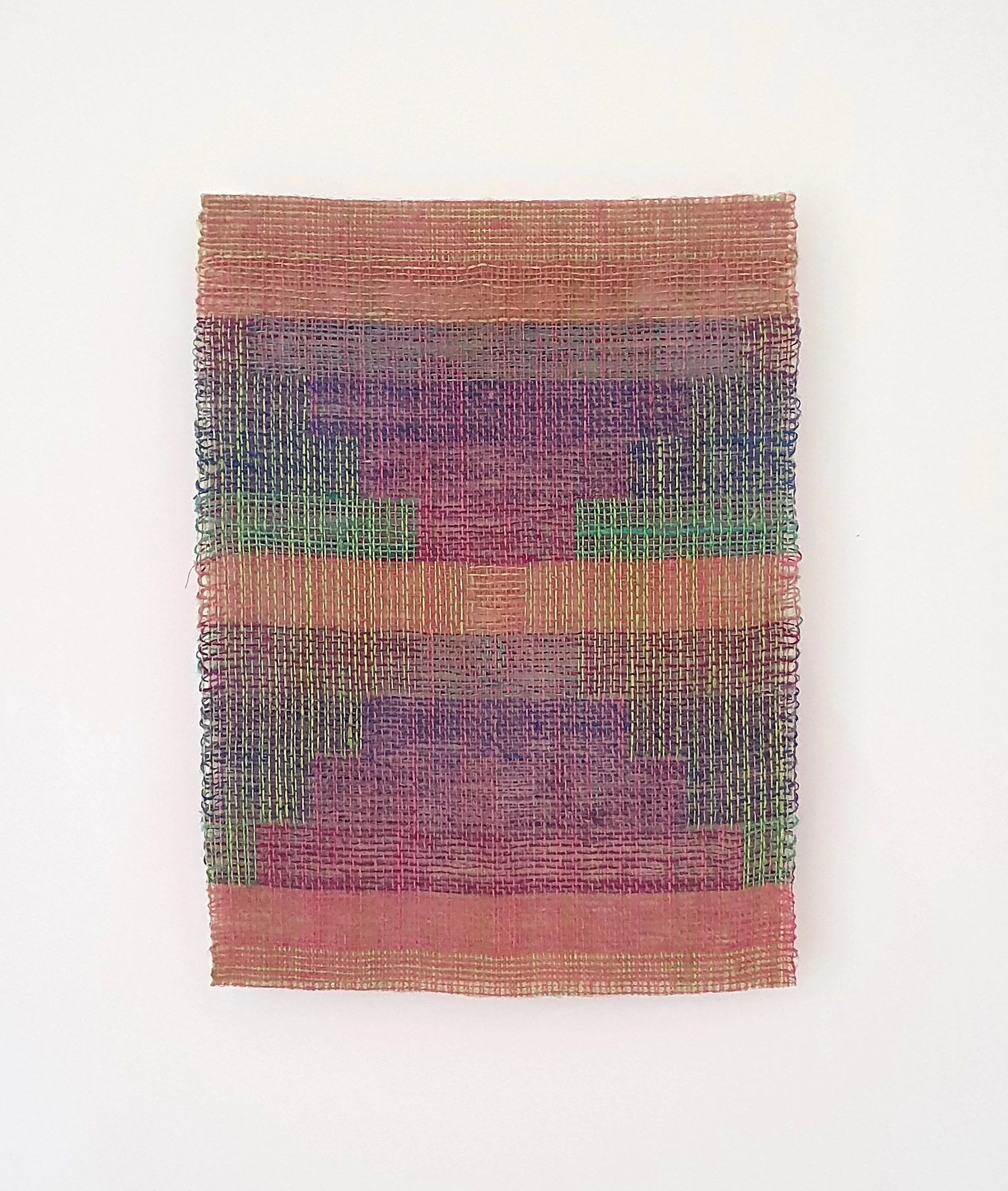
WORK OF THE WEEK: Ann Sutton
Ann Sutton's conceptual and formal philosophy, which grew from her knowledge of Constructivism combined with her interest in sculpture and scale, sets her apart from all other textile artists of her time. She has invented innovative techniques for working with textiles and was one of the first practitioners in her field to realise the true potential of computers in creating loom-woven textiles
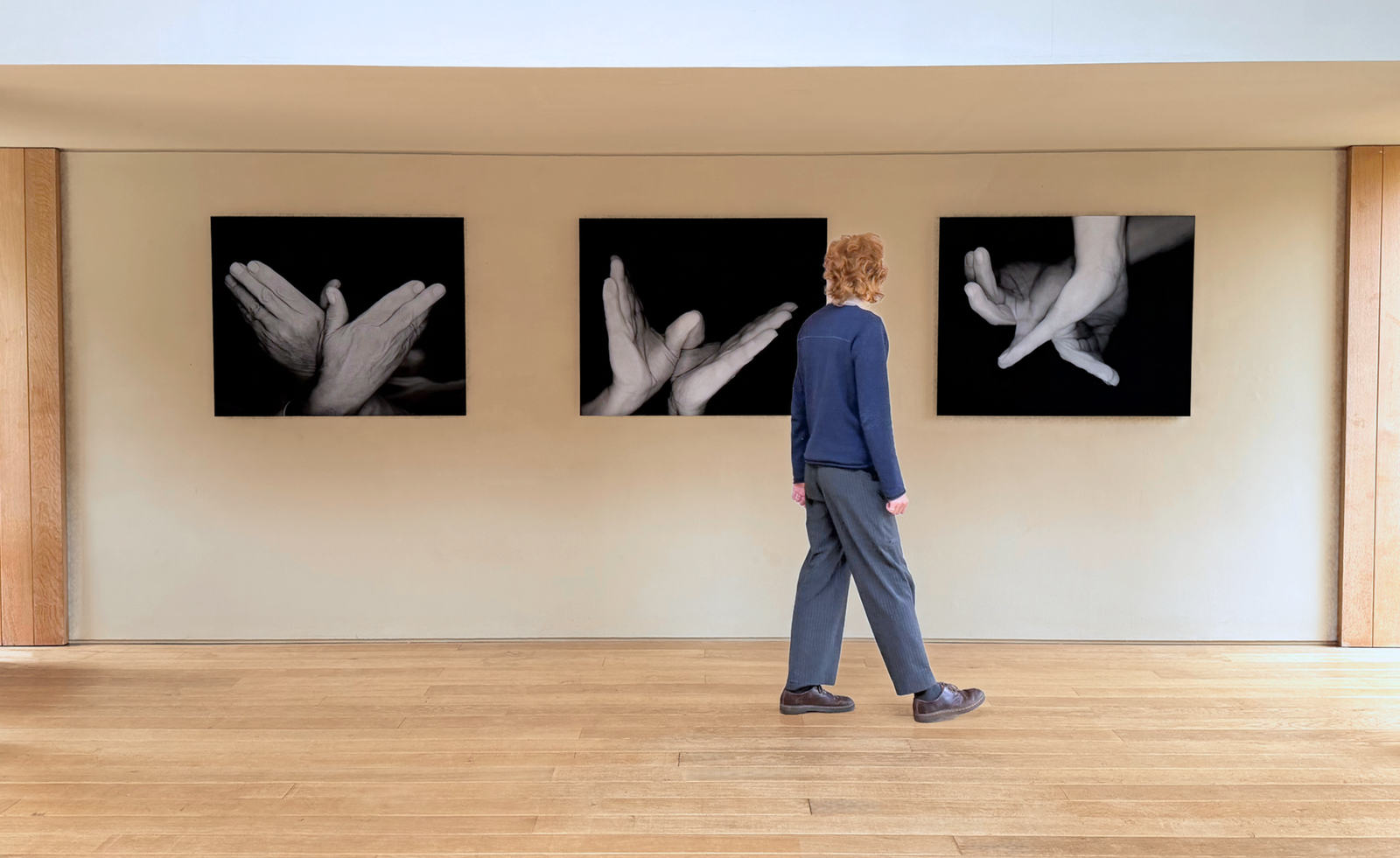
WORK OF THE WEEK: David Ward, I felt my life in both my hands, 2024-5
Light is a thread that runs consistently through David Ward's work and it plays a prominent part in these archival prints. Ward touches on associations of childhood memories - playing with light, using your hands to create shadow images evoking the fantasy of taking flight. Printed on Hahnemühle Bamboo paper, Ward achieves rich, velvet blacks to contrast the light of the images. I felt my life with both my hands comes from an Emily Dickinson poem of the same title.
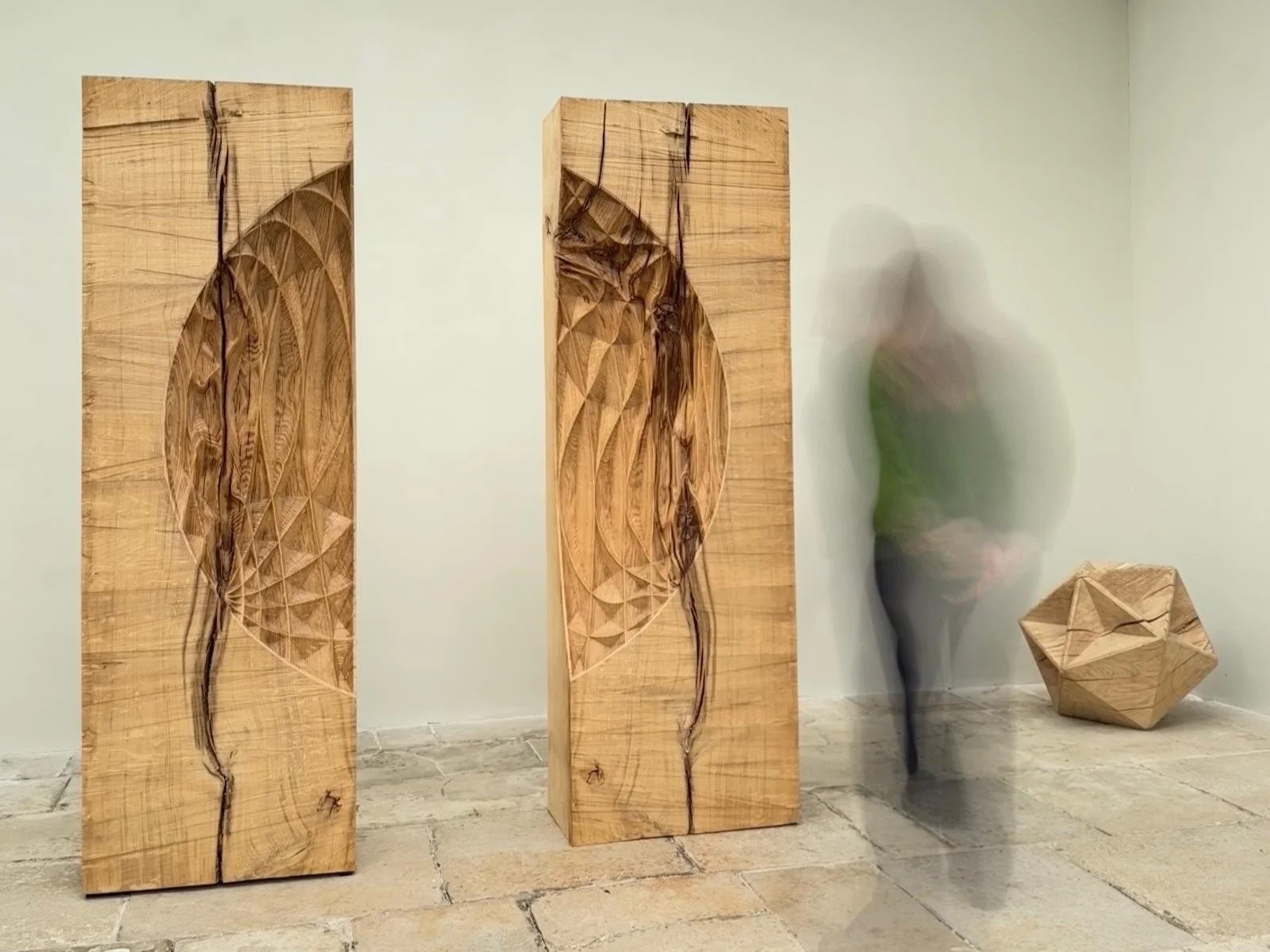
WORK OF THE WEEK: Alison Crowther, Anatomy of a Tree, 2026
Alison Crowther works with naturally felled trees and is guided by their concentric lines to create unique forms, bringing together structured geometry revealing the tree's inner anatomy. By retaining the marks and patterns of timber, Crowther accentuates the natural, grounding presence of this ancient material.
Chiselled by hand, Anatomy of a Tree's crescents are carved from a storm felled English Oak from Petworth Park. The book matched halves reveal the core, heart wood of the timber running vertically through the cross section.
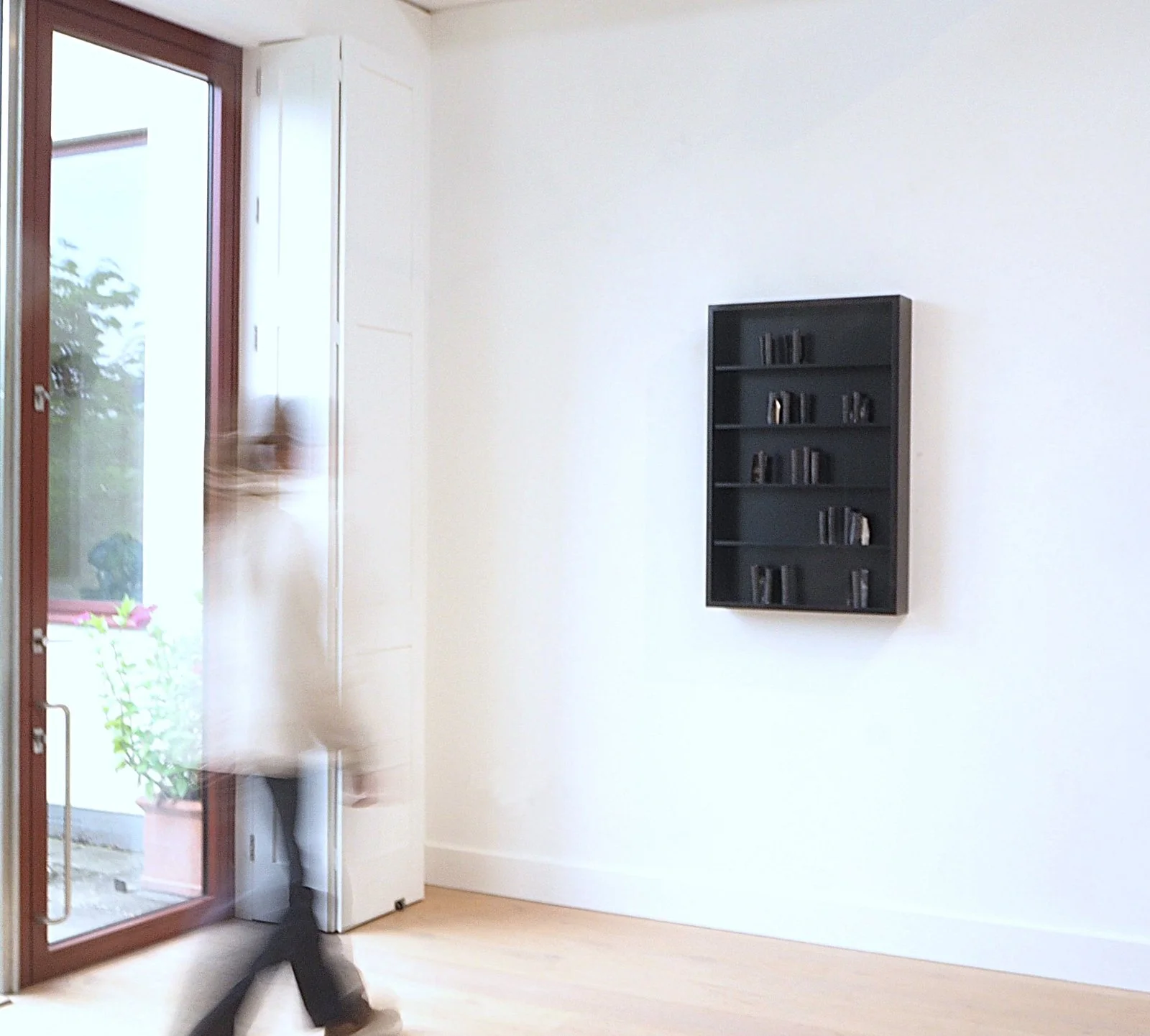
WORK OF THE WEEK: Edmund de Waal, landfall, 2024
landfall has just returned from a major museum touring exhibition; Playing with Fire: Edmund de Waal and Axel Salto travelling from CLAY Museum of Ceramic Art in Denmark; Kuntsilo, Norway and finally Hepworth Wakefield in the UK. Curated by de Waal, it brought together his own work and that of acclaimed Danish ceramicist, Axel Salto. Salto was a radical polymathic figure who crossed boundaries from one discipline to another, his work was shown alongside a major new installation by de Waal reflecting on Salto’s enduring influence.
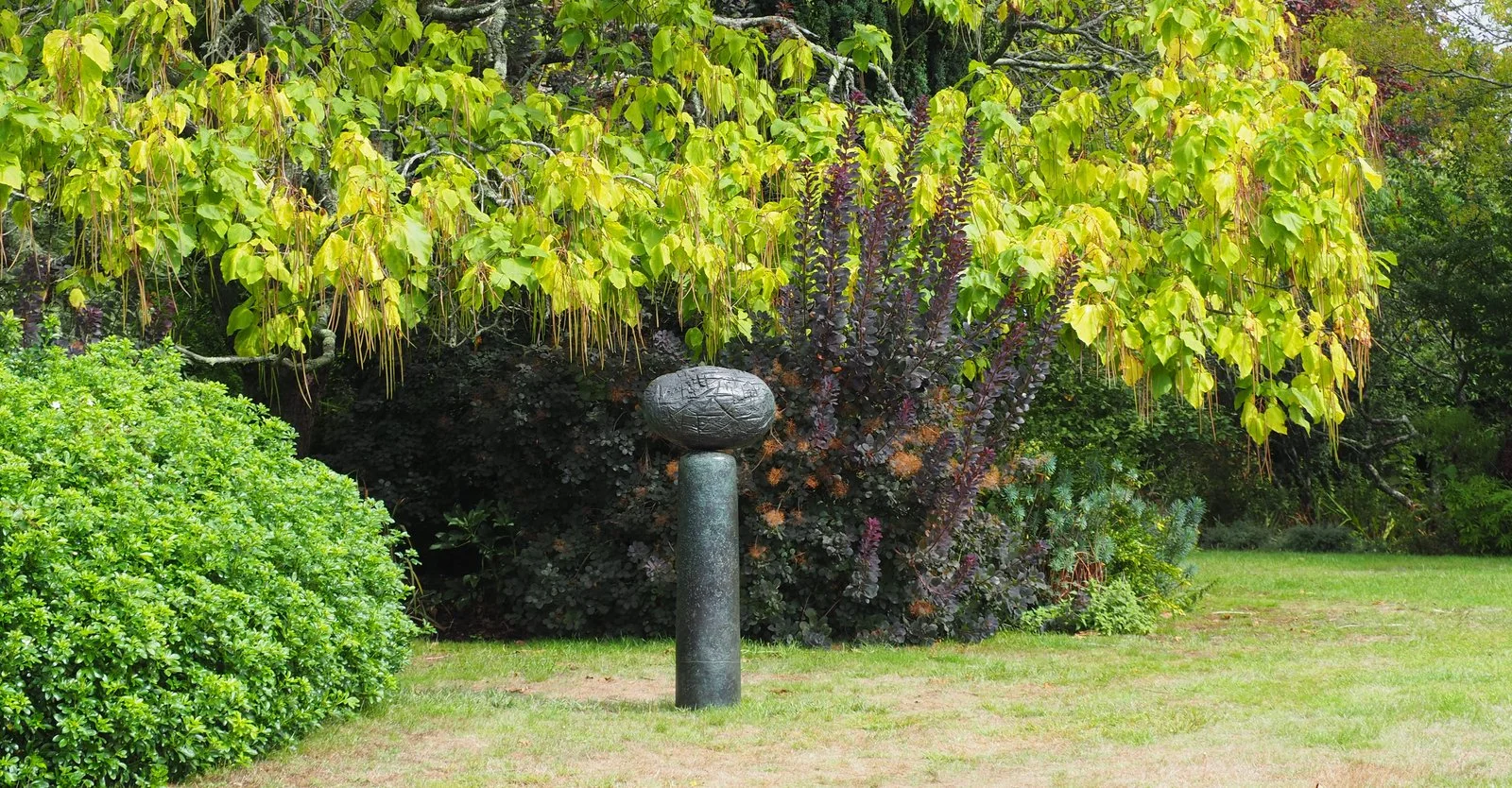
WORK OF THE WEEK: William Turnbull, Aphrodite, 1984
Among the most compelling of William Turnbull's totemic female figures, Aphrodite distils the human form into an austere vertical stack of just two interlocking elements. Aphrodite's torso and head are delicately balanced with the poise of an ancient idol.
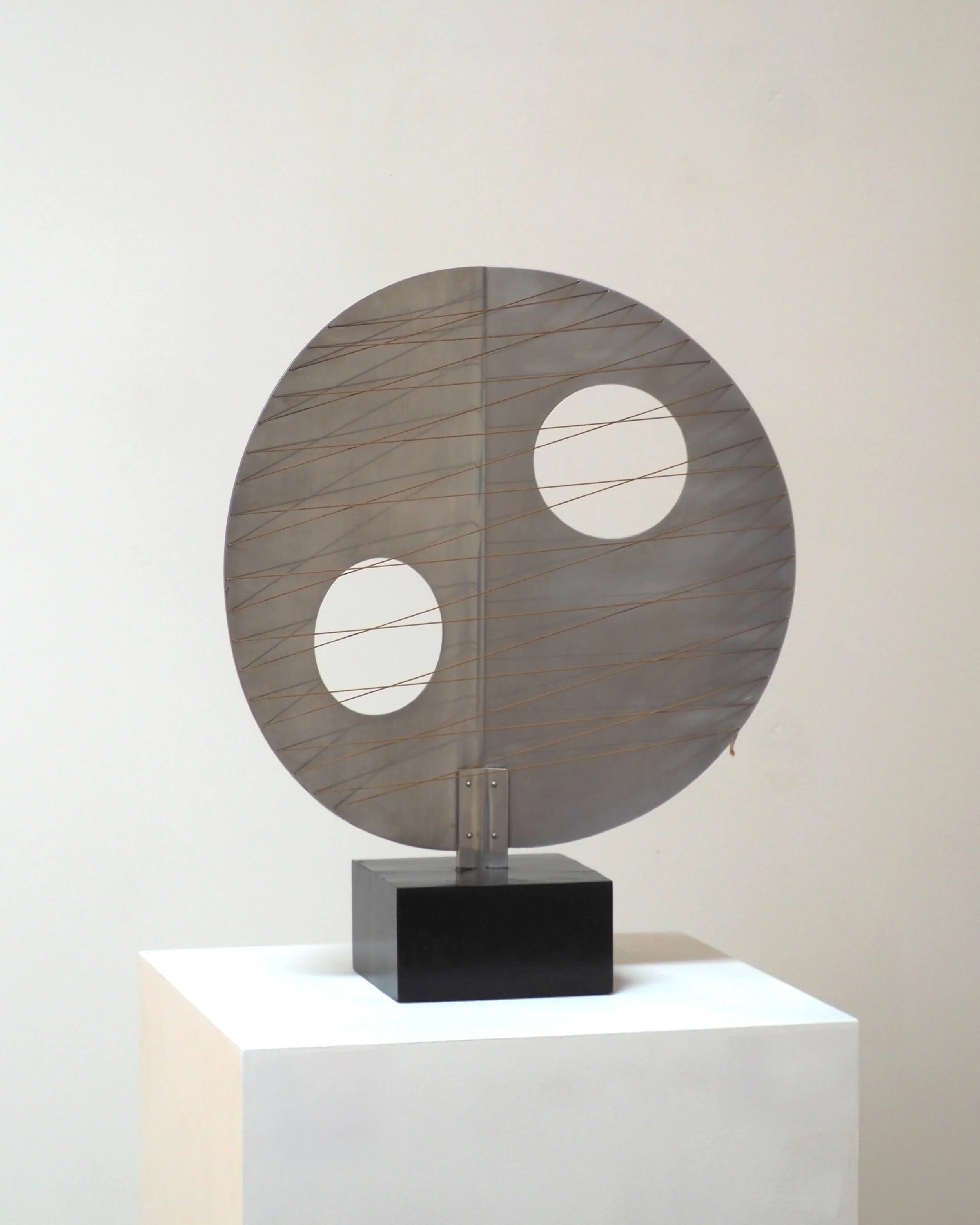
WORK OF THE WEEK: Barbara Hepworth, Disc with Strings (Moon), 1969
Disc with Strings (Moon) was completed by Barbara Hepworth in 1969, the same year man landed on the moon with the Apollo 11 mission. This sculpture was informed by Hepworth's fascination with technological developments and the widening of our understanding of the universe, particularly in the case of the development of aviation. Disc with Strings (Moon) combines Hepworth’s concerns with the experience of the natural world and the modernist relationship to scientific development.
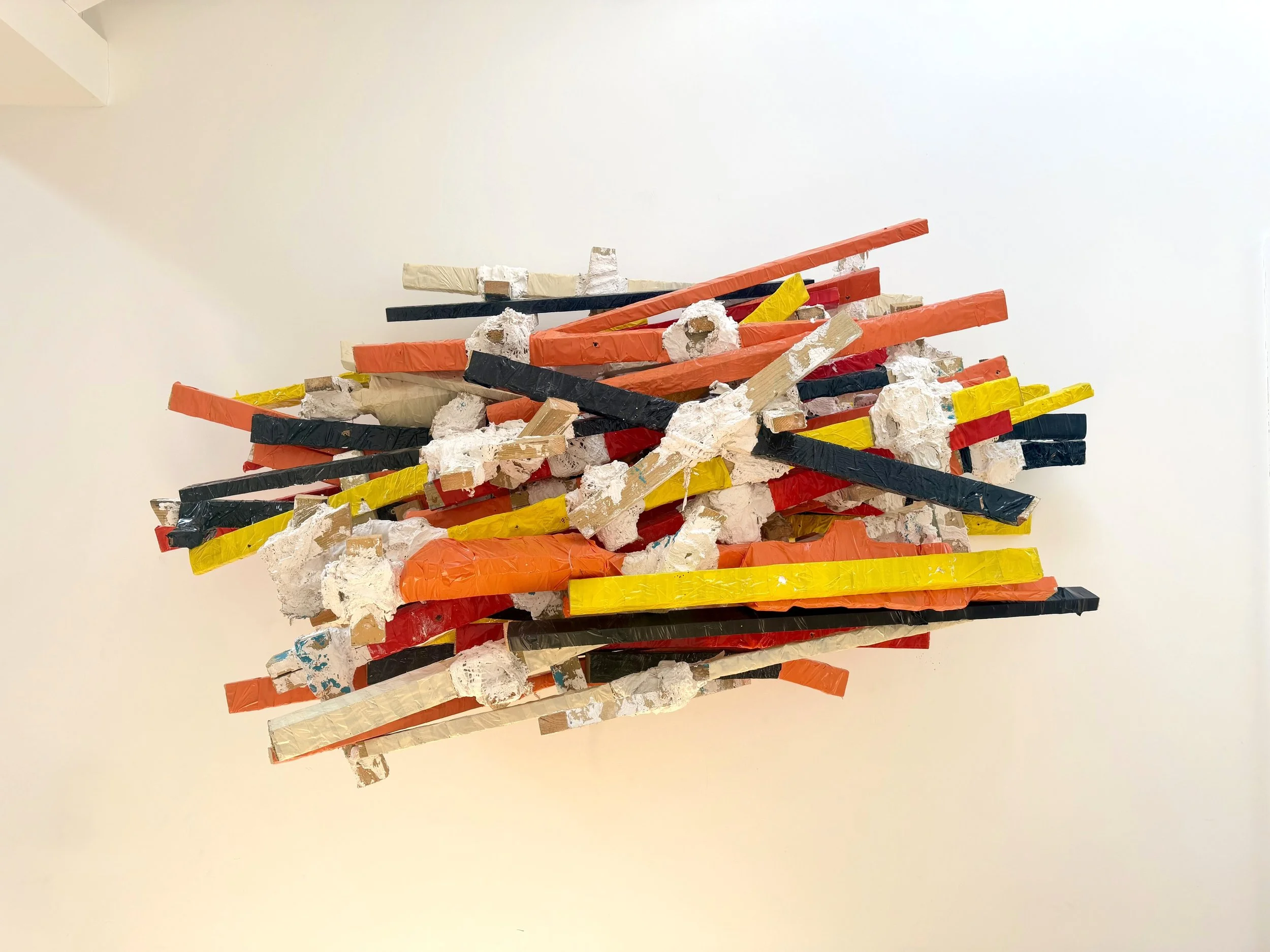
WORK OF THE WEEK: Phyllida Barlow, untitled: broken shelf, 2010
untitled: broken shelf (2010) is an example of Phyllida Barlow’s playful experimentation with mass-produced construction materials. Its precarious position, hung on the wall, suspends the work in a state of both construction and destruction. The sculpture is made of timber wrapped in colourful tape; all attached together with textured plaster.
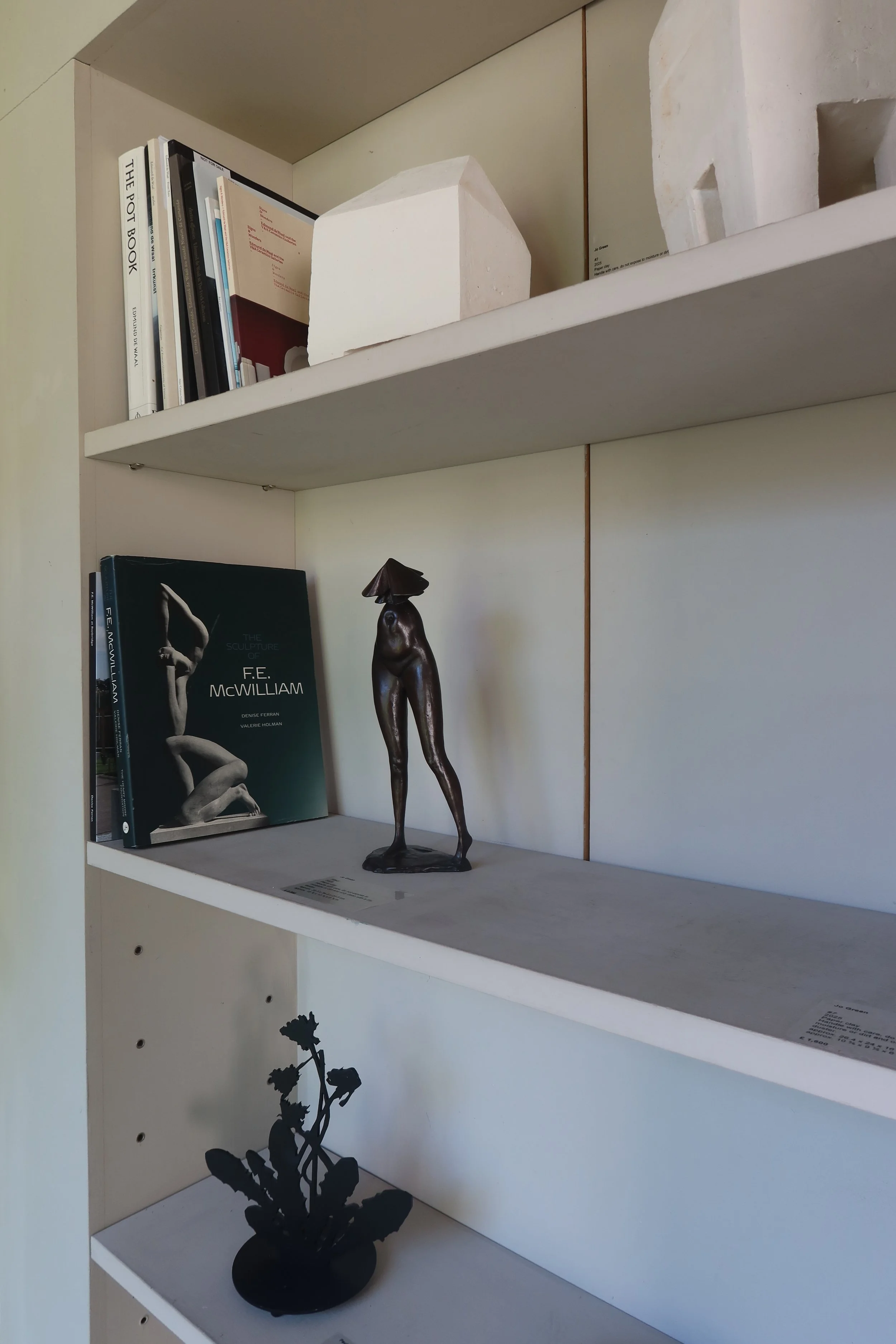
WORK OF THE WEEK: F.E. McWilliam, Legs Standing, 1978
McWilliam turned to the theme of legs after a period of more or less representational sculpture in the early 'seventies when he had worked on the 'Women of Belfast' and 'Banners' series, both of which had elements of direct political reference. The 'Legs' sculptures mark a return to a more playful and paradoxical imagery, and take both the idea of the complete fragment, and of the eliminated torso, as the basis for a series of unexpected and idiosyncratic improvisations
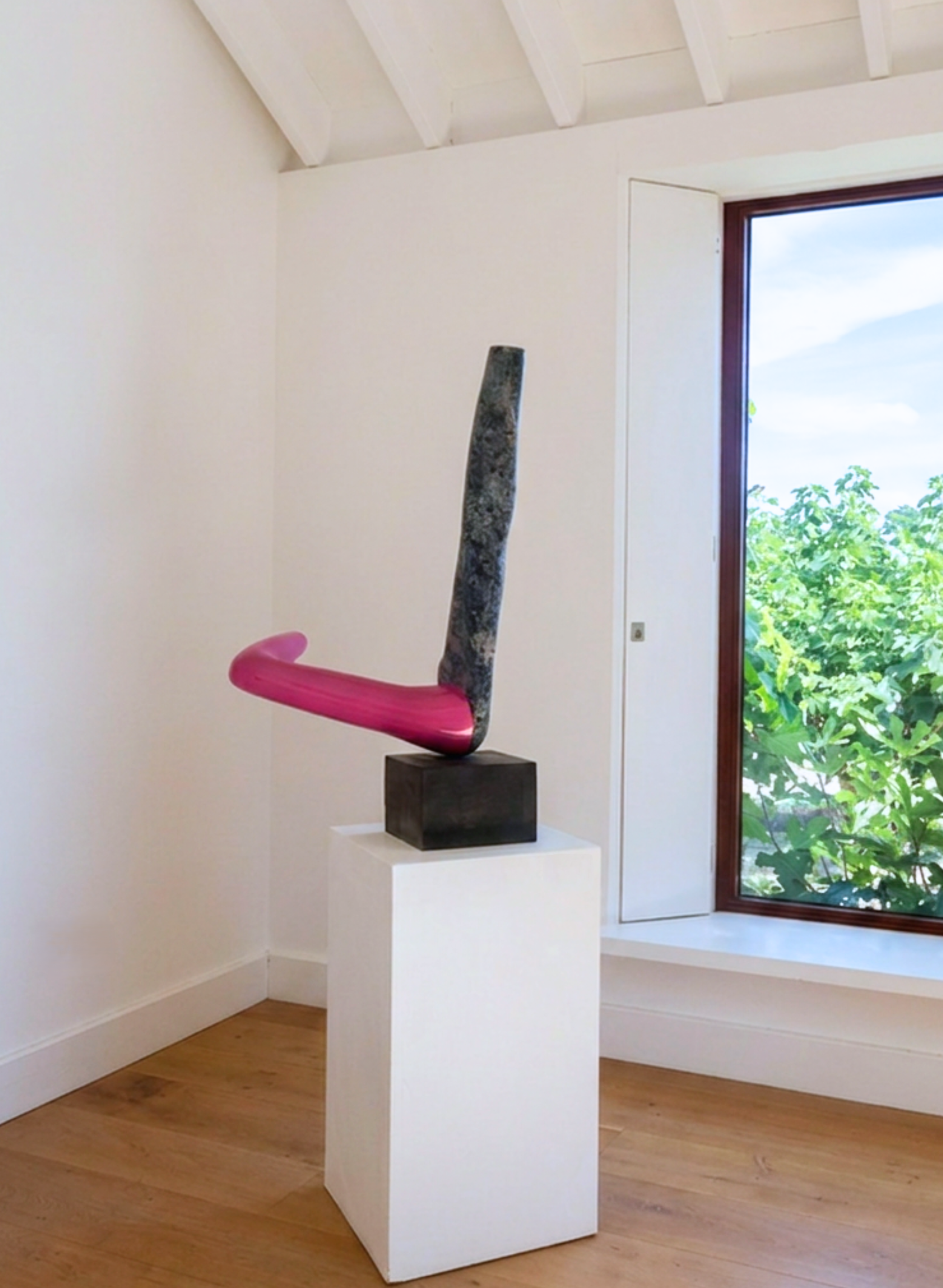
WORK OF THE WEEK: Gary Hume, Sculpture 4, 2009
Sculpture 4 alludes to a fragment of Greek and Roman sculpture yet here Hume plays with the conventions of monumental marble sculpture with his hallmark bright, glossy paint charging the sculpture with emotion and a sense of latent movement. The limbs, though disembodied, maintain a sleek and sensual quality and encourage the viewer to walk around the sculpture, viewing it in the round.
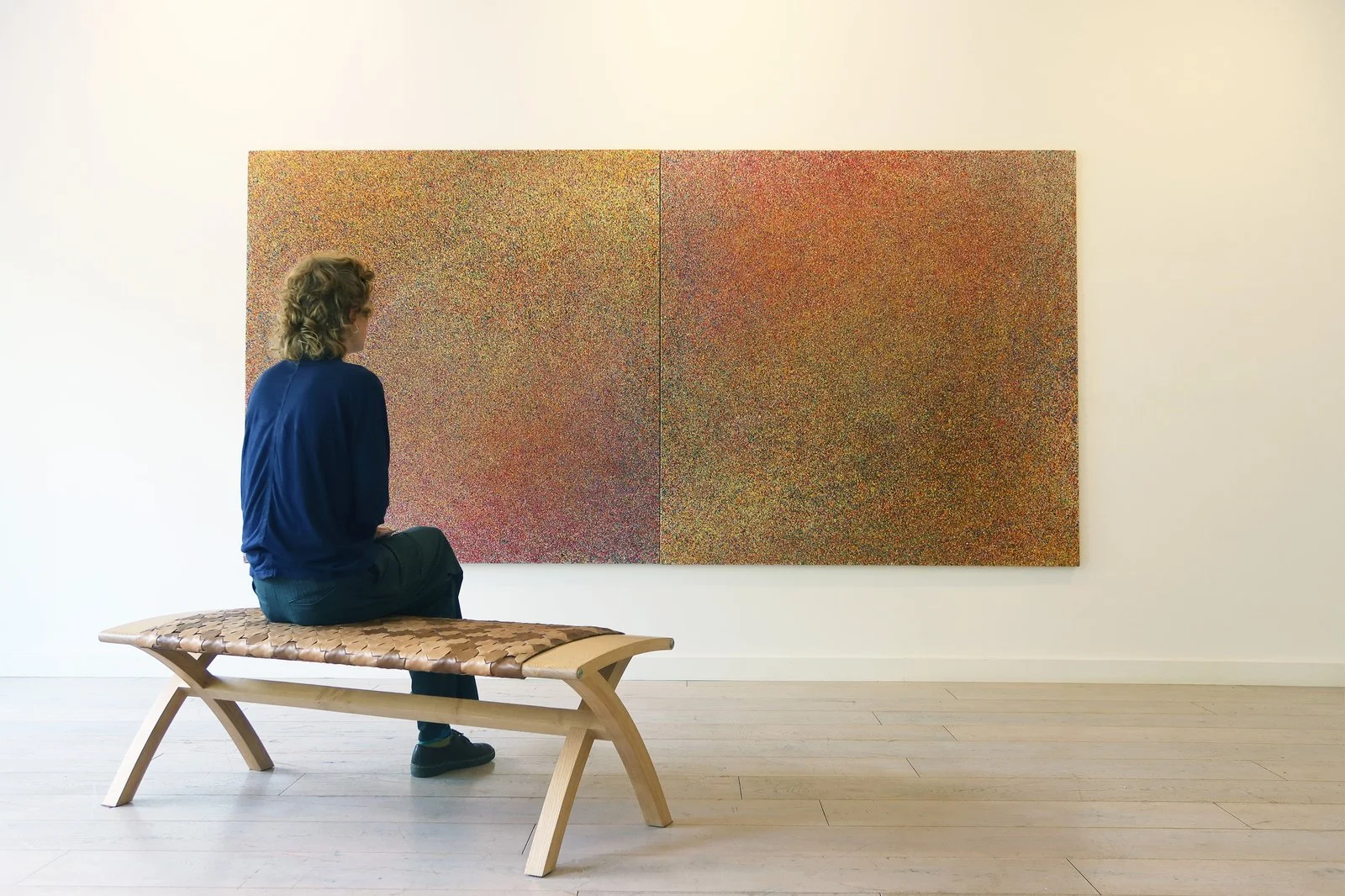
WORK OF THE WEEK: Ian Stephenson, Diorama SS.7.67, 1967
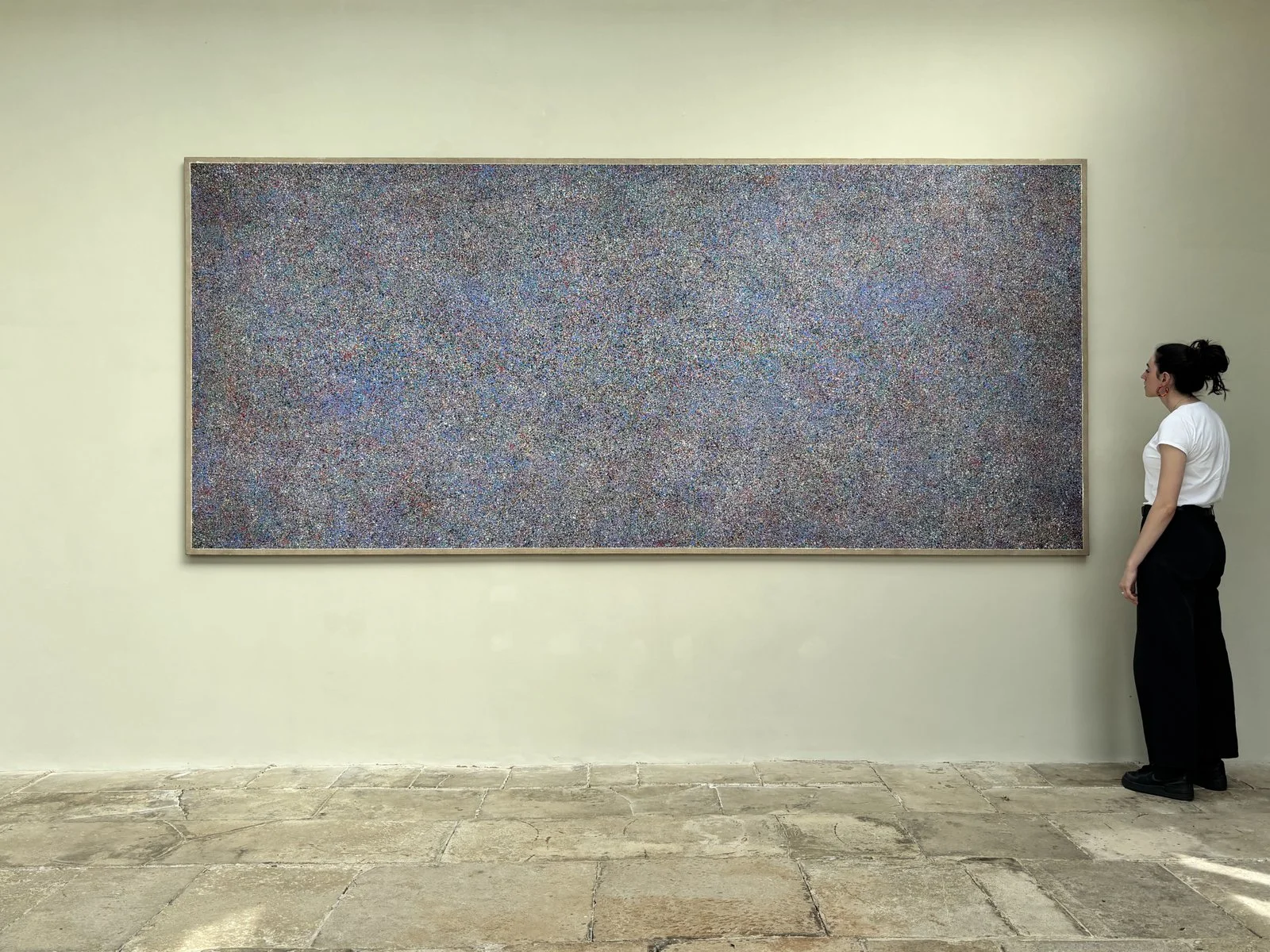
Diorama SS.7.67 is a record of a meticulously planned performance, with its subject becoming the act of painting itself.
The work comes from a pivotal time in Ian Stephenson’s practice, when he developed a process nearly as absorbing as its outcome; a methodical equation of applying paint to canvas by flicking in precise sequences. Diorama SS.7.67 is made up of two canvases, both almost identical in appearance but with one rotated 180 degrees. Stephenson moved around each canvas with metronomic regularity; measuring his steps and repeating the exact same paces around each canvas on the floor. Layering paint, dots covering dots to create an infinite, burning red expanse akin to stars in a galaxy.
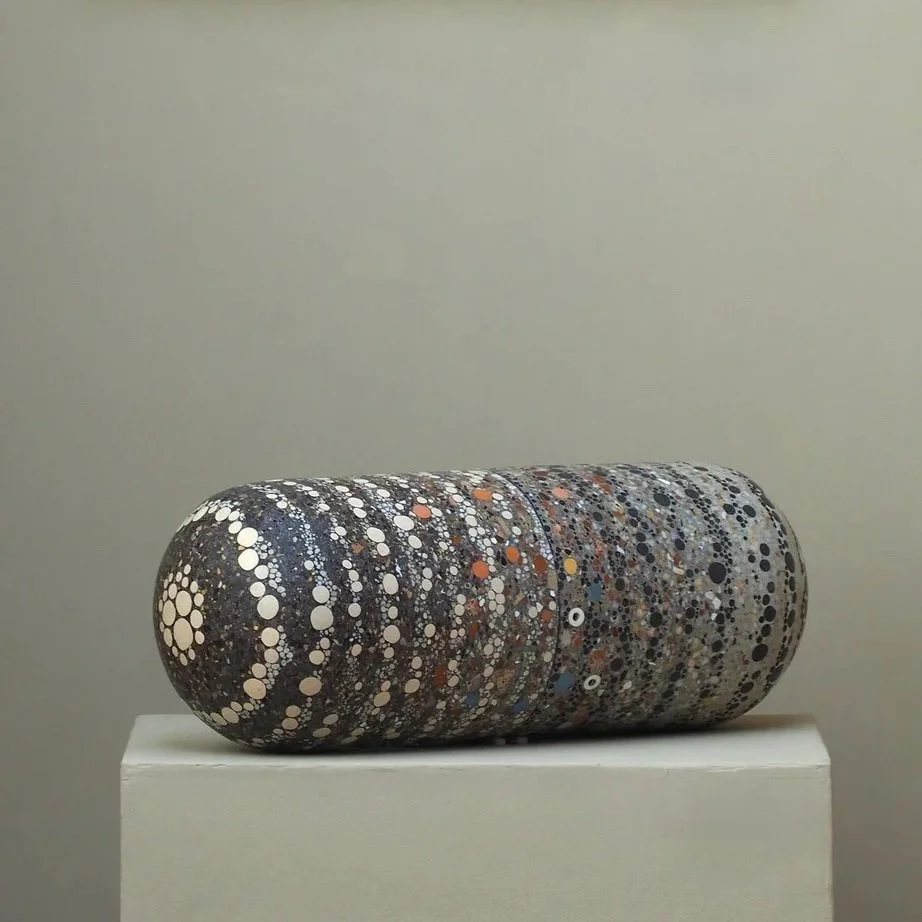
WORK OF THE WEEK: Jacob van der Beugel
Jacob van der Beugel's work interprets human identity and DNA, fusing materials to bridge the divide between science and art. De-polariszumab 3 seeks to mirror the polarisation that van der Beugel believes now embodies contemporary life. The black and white at the extremities of the form warm into colour in the middle ground.